
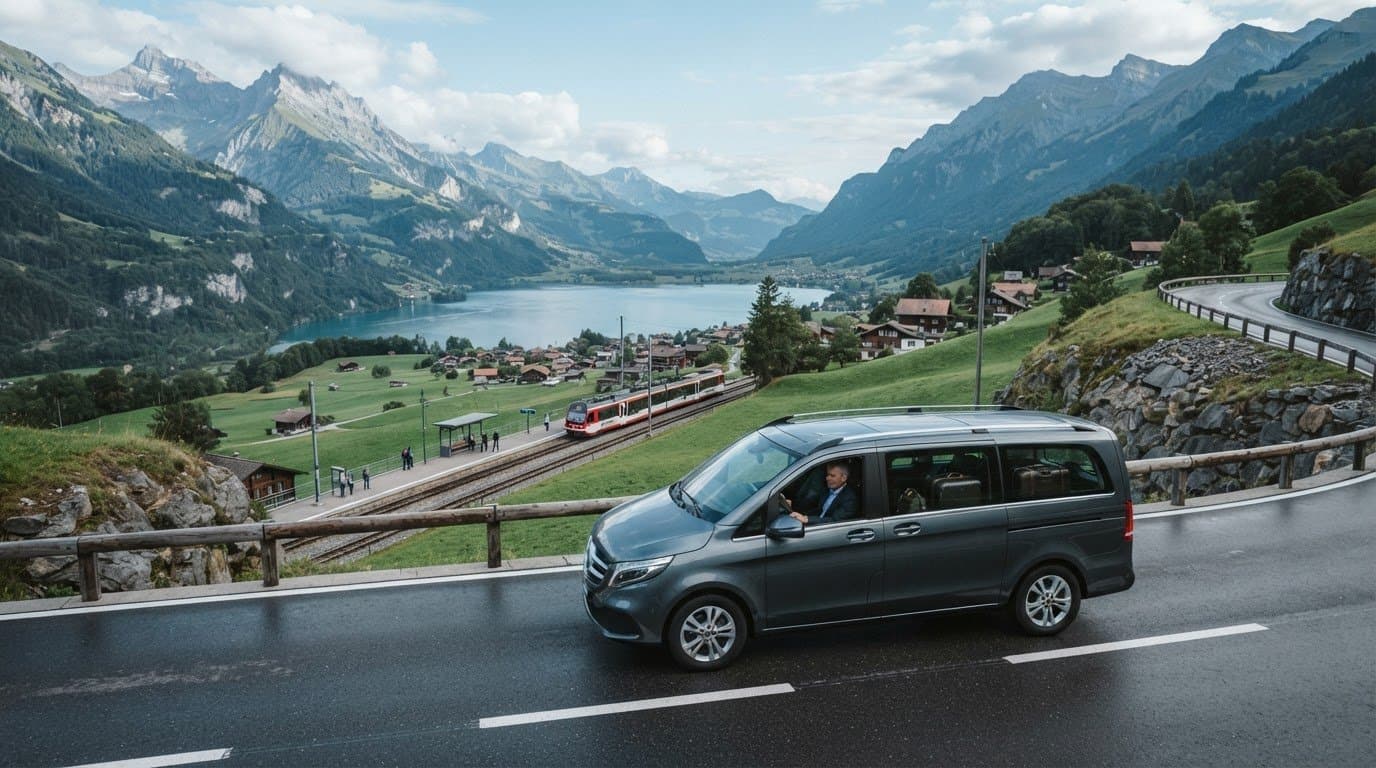
A private vehicle may make a journey feel simpler, but it doesn’t automatically make it safer. The safety of private travel in switzerland depends on the route, road and weather conditions, and how well the transport arrangements suit your needs. Switzerland is widely regarded as safe, yet mountain roads, changing conditions, and crowded travel hubs still call for sensible planning.
If you’re comparing a private tour with trains or self-driving, consider which option will feel most comfortable and manageable. The right choice depends on your itinerary, mobility needs, luggage, and willingness to handle logistics yourself. A private driver-guide can help coordinate the journey and tailor the plan, but it’s one option to assess, not a guarantee of greater safety.
This 2026 guide explains what to consider, how private travel compares with public transport and driving yourself, and what to ask before booking. Use the checklists to compare arrangements and prepare for a journey that feels well planned.
Key Takeaways
- The safety of private travel in switzerland depends on your itinerary, current conditions, personal needs, and the arrangements you confirm.
- Compare private transport, public transport, and self-driving by considering who handles coordination and which option best fits your journey.
- Before departure, check official travel guidance, weather updates, transport notices, and any personal travel requirements relevant to you.
- Ask a private travel provider how itinerary changes are handled, what the service includes, and how you’ll communicate if plans need to change.
- Use a before-booking and day-of-travel checklist to prepare for a comfortable, well-coordinated journey.
Is private travel in Switzerland safe? Start with the right definition
Private travel in Switzerland can be a suitable option, but no transport choice removes every risk. The safety of private travel in switzerland depends on more than the vehicle. It also involves planning the itinerary, responding to changing conditions, knowing how to contact your provider, and accounting for your comfort or mobility needs.
Separate a destination’s general safety picture from the decisions involved in a particular journey. Crime is one part of the wider picture. The overview of crime rates in Switzerland can provide context, but it can’t tell you whether a route, schedule, or travel arrangement suits your circumstances. A practical definition is this: private travel is suitable when the transport, itinerary, communication plan, and traveller’s needs are considered together, without assuming that any arrangement is risk-free.
What does travel safety mean for a private trip?
Look beyond the choice of car or train. Check whether the itinerary allows a comfortable pace, pickup and timing details are clear, and you know how to get in touch if your preferences or plans change. If mobility, luggage, or other personal needs affect your journey, raise them before booking and confirm how the proposed arrangements address them.
A private vehicle changes how you travel, not the conditions beyond its doors. Weather, road conditions, and disruptions can still affect the day. A provider may say safety and reliability are priorities, but that statement isn’t an independently verified guarantee. Ask what the service includes and which practical arrangements you can confirm.
What private travel can and cannot control
A private driver-guide can bring useful coordination to a journey: you can discuss transport and itinerary planning together, and a tailor-made plan may be adapted to your preferences. Swiss Epic Tours describes its private tours and transfers as tailor-made and identifies safety and reliability as priorities. These are relevant details to consider, not proof that private travel is inherently safer.
Some factors remain outside a provider’s control. Weather can shift, roads can become difficult, health needs can change, and transport or other services may be disrupted. Before booking, ask how itinerary flexibility works, how updates will be communicated, and what happens if a planned part of the journey can’t go ahead. Clear answers help you decide whether a private arrangement fits your needs. Comfort or exclusivity alone shouldn’t be treated as a measure of safety.
Which safety factors matter most when travelling in Switzerland?
A well-planned journey accounts for more than the route on a map. Conditions can change between planning and departure, so check current official travel advice, weather forecasts, and transport notices before setting out and again before major legs. Use live updates to reassess timing and plans based on information from the relevant authorities and operators, rather than relying on an earlier itinerary.
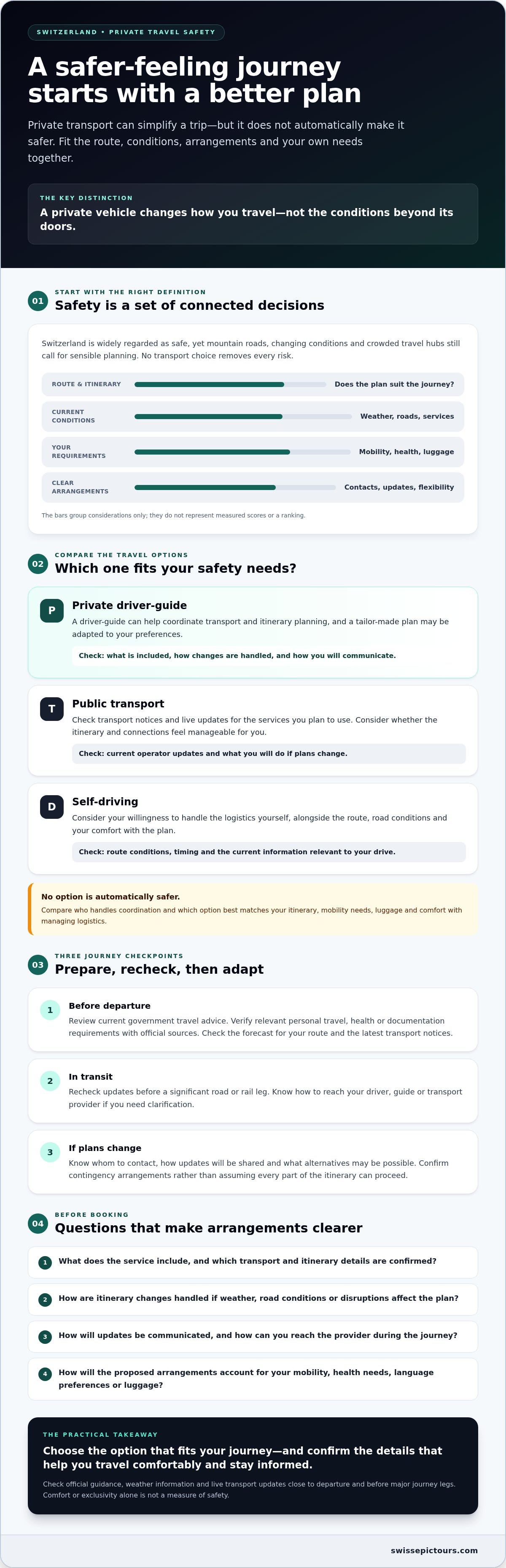
Use three checkpoints to keep the practical details in view:
- Before departure: Review your government’s current travel advice and verify any personal travel, health, or documentation requirements with official sources. Check the forecast for your planned route and the latest notices for the transport you’ll use.
- In transit: Recheck updates before a significant road or rail leg, and make sure you know how to reach your driver, guide, or transport provider if you need clarification.
- If plans change: Know whom to contact, how updates will be shared, and what alternatives may be possible. Confirm the provider’s contingency arrangements rather than assuming every part of the itinerary can proceed as planned.
How weather and transport conditions can affect plans
Weather and service conditions can affect travel time and whether an activity or connection remains practical. Road, rail, and outdoor conditions each need their own checks. A forecast alone won’t tell you whether a specific service is running or a route has changed. Consult official weather information, relevant road notices, and transport operators’ live updates close to departure and before major journey legs. If an update affects your schedule, discuss adjustments before continuing with the original plan.
Personal needs, communication, and contingency planning
Your comfort and requirements belong in the safety plan. Consider mobility, health needs, language preferences, luggage, and how much flexibility you’d like in the day. Share relevant details before booking, then confirm what arrangements are included and how to raise questions while travelling. If you’re choosing a private driver-guide, ask how itinerary preferences and changes are communicated. Coordinated planning can help, but the exact service scope should be clear.
Before departure, check current official emergency and health guidance, including advice relevant to your circumstances. To understand a provider’s approach to personalized planning, review Swiss Epic Tours’ tailor-made private tours and transfers and confirm the details directly. A little preparation can make a grand journey feel more composed, even when conditions call for a change of plan.
Private driver, public transport, or self-drive: which suits your safety needs?
No travel mode guarantees a safer journey. The safety of private travel in switzerland depends on the traveller, itinerary, current conditions, and specific service arrangements. Compare how each option handles coordination and responsibility, then match those demands to your comfort, mobility, and plans.
| Option | Control and flexibility | Coordination and traveller responsibilities |
|---|---|---|
| Private driver-guide | A planned itinerary may be tailored to preferences, with some flexibility depending on the service agreed. | Transport coordination is handled through the provider, but you should confirm the itinerary, vehicle arrangements, communication, and what happens if plans change. |
| Public transport | Routes and timetables shape the journey. Check the services available for your intended stops and connections. | You’ll need to follow operator updates and manage transfers, tickets, luggage, and timing according to your needs. |
| Self-drive | You choose the route and schedule, subject to current conditions and access. | You’re responsible for the vehicle, route decisions, and responding to changing conditions. Consider whether you’re comfortable managing these tasks throughout the trip. |
When a private driver-guide may be a practical fit
A private driver-guide can suit travellers who’d rather not coordinate every leg themselves. A tailored itinerary can also make it easier to discuss pace, comfort, mobility considerations, and personal preferences in advance. That coordination can be valuable, but it doesn’t guarantee a safer journey. Confirm what the provider includes, how changes are handled, and how you’ll receive updates. Check current conditions independently, too.
Swiss Epic Tours offers tailor-made private, driver-guided tours and transfers, with professional multilingual guides. If you’re considering this arrangement, review the private tours and transfers and confirm the details that matter to your trip.
What to weigh with public transport and self-driving
Public transport is a distinct option, not a fallback. Check routes, schedules, and live service notices directly with the relevant operators, especially if your plans involve connections. It may suit an itinerary that fits available services and a traveller comfortable managing transfers.
Self-driving gives you direct control over stops and timing, but puts more decisions on you, including route planning and adapting to road conditions. A private driver shifts some coordination to a provider, but it doesn’t remove the need to assess the plan. Choose the option whose responsibilities and flexibility best fit your needs, then verify its arrangements before departure.
How to prepare for a safe private journey in Switzerland
A considered plan makes it easier to enjoy the scenery without leaving important details to chance. Use this checklist before booking, shortly before departure, and on the day of travel. The safety of private travel in switzerland depends partly on how clearly the itinerary and arrangements fit your needs.
Questions to ask before confirming a private tour
Ask who coordinates the itinerary and how you can contact the provider during the trip. Explain any mobility, health, timing, language, luggage, or comfort needs early, then confirm how the proposed service addresses them. Find out what happens if weather, transport updates, or a personal need calls for a change of plan.
Be specific about the vehicle and service arrangements included. Don’t assume particular features, support, or flexibility unless the provider confirms them. Clear answers give you a practical basis for comparing options, not a promise that every disruption can be prevented.
What to check shortly before and during travel
Conditions and schedules can change after you book. Before departure, revisit current official travel advice and relevant weather, road, rail, or other service updates for your planned journey. Check again before major travel legs. Keep essential travel documents and the provider’s contact details accessible, and agree on how you’ll receive and respond to schedule updates.
- Before booking: Share your needs; confirm itinerary coordination, contact methods, included arrangements, and how changes are handled.
- Before departure: Verify current official advice, relevant transport and weather updates, and personal travel requirements.
- On the day: Keep documents and contact details handy; check for updates and know whom to contact if a concern arises.
Provider comparison checklist: “Who coordinates the trip? How do I reach you? What arrangements are included? How will changes be communicated?” Compare specific, clear answers rather than broad assurances.
For a private journey with tailored planning, you can explore private tours and transfers, then confirm the itinerary and service details directly before booking.
Choosing a private travel provider in Switzerland with confidence
A polished itinerary is only part of a well-planned private journey. To assess the safety of private travel in switzerland, look beyond reassuring phrases and find out how the provider communicates, plans routes, responds to your needs, and handles changes. Clear answers help you judge whether the service fits your trip, though they can’t eliminate risks or guarantee an unchanged itinerary.
How to assess a provider’s safety and reliability claims
Ask for practical explanations rather than relying on broad claims such as “safe” or “reliable.” Who coordinates the itinerary? How can you reach them during the trip? What happens if weather, transport updates, or a personal need means plans should change? A provider’s answers should make the service scope and contingency arrangements understandable before you book.
Ask about relevant experience with the type of journey you’re planning, and confirm details that matter to you, such as the vehicle arrangements and how updates are shared. Don’t assume a particular feature, credential, or support arrangement unless it’s explicitly confirmed. Specific, verifiable information is more useful than a general assurance.
When a tailored private tour may make sense
A private tour may suit travellers who value a dedicated guide, coordinated transport, and a pace shaped around their preferences. Swiss Epic Tours provides tailor-made private, driver-guided tours and transfers, with professional multilingual guides and a modern luxury vehicle fleet. These are service details to consider, not proof that one transport choice is safer than another. Confirm how the proposed itinerary and arrangements fit your mobility, comfort, and communication needs.
For a broader look at the premium travel experience, read the guide to luxury travel in Switzerland. Then use these questions to evaluate any provider you’re considering:
- Is the itinerary and service scope explained clearly?
- Can you confirm how to communicate during the trip?
- Are changes and contingency arrangements described in practical terms?
- Have your personal needs and preferences been discussed?
If a tailored, driver-guided journey suits your plans, review the provider’s service details and confirm trip-specific arrangements before booking.
Plan your Swiss journey with confidence
The safety of private travel in switzerland isn’t determined by the vehicle alone. It depends on choosing transport that fits your needs, checking current conditions, and knowing how plans and questions will be handled. Compare private travel, public transport, and self-driving by the responsibilities each places on you, then confirm service details directly before booking.
A private driver-guide may be a thoughtful fit if coordinated transport and a personalized pace matter to you. Swiss Epic Tours offers tailor-made private tours and transfers across Switzerland, with professional multilingual guides and a modern luxury vehicle fleet. These details can help you assess whether the service suits your itinerary, but they aren’t a guarantee of risk-free travel.
For a journey shaped around your preferences, explore Swiss Epic Tours’ tailor-made private tours and transfers and ask about the itinerary, vehicle arrangements, communication, and contingency plans before booking. Clear information and a plan that reflects your needs can help you set out with greater confidence.
Frequently Asked Questions
Is private travel in Switzerland safe?
Private travel can be a suitable option, but no transport arrangement removes every risk. The safety of private travel in switzerland depends on your itinerary, current weather and transport conditions, the provider’s arrangements, and your own comfort, mobility, or health needs. Before setting out, check current official advice and updates relevant to your route. A carefully planned private journey can simplify coordination, but it isn’t a guarantee of an incident-free trip.
Is it safer to travel around Switzerland with a private driver?
Hiring a private driver doesn’t, by itself, prove that a journey will be safer. It may make coordination easier because you don’t need to manage each driving leg yourself, and a driver-guide may help tailor the itinerary to your preferences. Compare the provider’s service arrangements with your needs, including communication and plan changes. Also consider current conditions and your comfort with public transport or driving yourself before deciding.
What should I check before booking a private tour in Switzerland?
Confirm what the itinerary includes, who coordinates it, and how you can contact the provider during the trip. Ask how changes are handled if weather, transport updates, or personal circumstances affect the plan. Clarify the vehicle and service arrangements rather than assuming particular features or support are included. Share relevant mobility, health, timing, language, and comfort requirements in advance, then check that the proposed arrangements work for you.
Can weather or transport disruptions affect a private tour in Switzerland?
Yes. Weather or transport disruptions can affect timing, connections, and whether parts of an itinerary remain practical, including for a privately arranged tour. Check current official weather information and relevant road, rail, or operator updates before departure and again before major journey legs. Ask the provider how changes are communicated and what alternatives may be possible. Don’t assume a planned route or activity will proceed unchanged if conditions shift.
How do I choose between a private driver, public transport, and self-driving in Switzerland?
Choose according to how much coordination, flexibility, and responsibility you want. A private driver can coordinate transport and a tailored itinerary; public transport requires checking routes, schedules, and connections; self-driving gives you route control while leaving vehicle and driving decisions to you. Consider your comfort, mobility, luggage, itinerary, and current conditions. Check service details directly, since no option is the universal best fit for every traveller or journey.
What should I do if my private travel plans change in Switzerland?
Contact your provider using the agreed communication method and ask what adjustments are possible. Check current official weather or transport updates relevant to the affected part of your journey, and avoid relying on outdated itinerary details. If the change involves an immediate safety concern, follow current local emergency guidance and instructions from the relevant authorities. Keeping essential documents and provider contact details accessible can make it easier to respond calmly.
Are private tours in Switzerland suitable for travellers with mobility or health needs?
They may be suitable, but arrangements vary, so discuss your specific needs with the provider before booking. Explain any mobility considerations, health requirements, preferred pace, luggage needs, or other factors that could affect the journey. Ask which vehicle and itinerary arrangements are included and whether planned stops meet your needs. Confirm the answers directly rather than assuming a tour is accessible or that particular assistance is available.