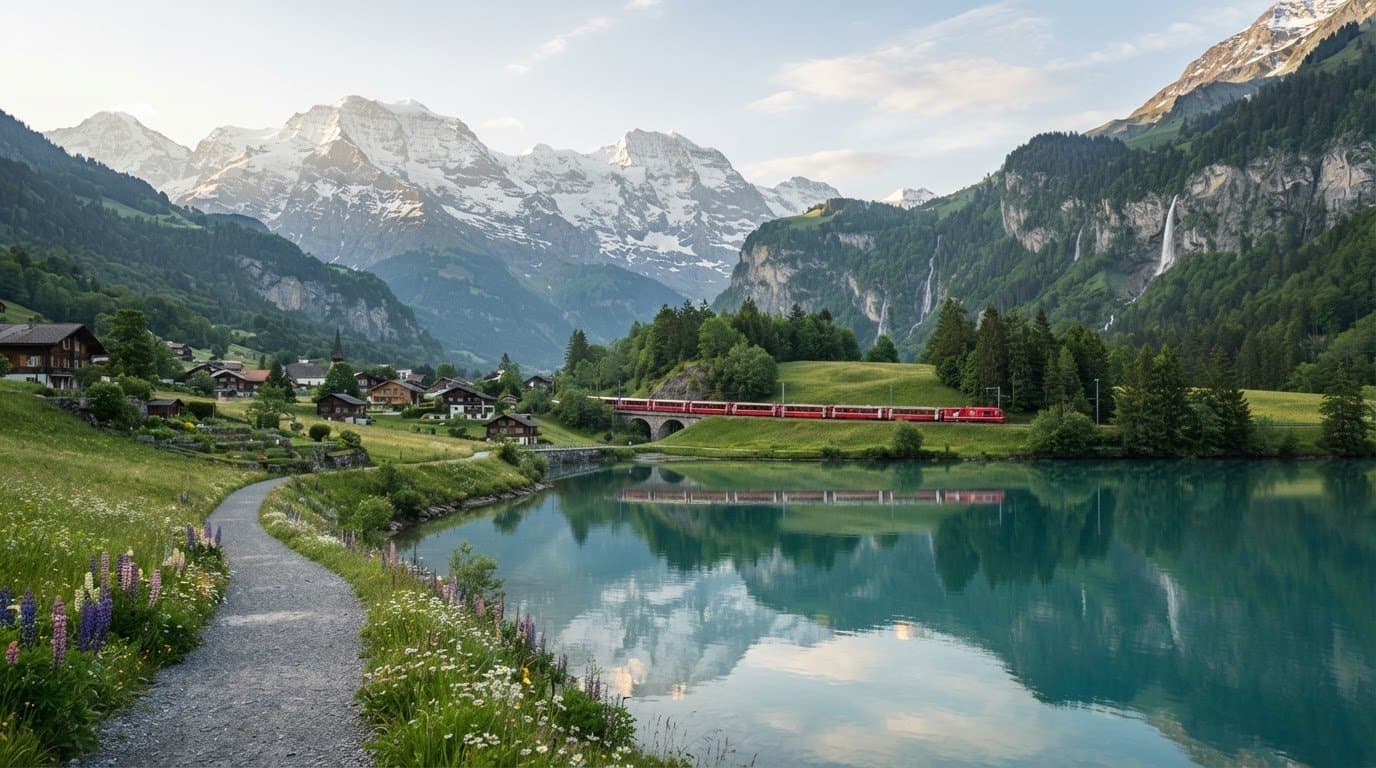
A slower route can make Switzerland’s most dramatic views easier to enjoy and photograph. For capturing Switzerland’s beauty without stress, use train connections to reach mountain areas and lakeside towns, then give each landscape time instead of racing between viewpoints. Lauterbrunnen, Grindelwald, Ticino, and Lake Geneva each offer a distinct setting for memorable images.
It’s natural to want iconic peaks, clear lakes, and storybook villages in your photos, but a tightly packed itinerary can leave little room to pause when the light shifts or a view catches your eye. A more relaxed pace helps you notice the details, from waterfalls framed by Lauterbrunnen’s cliffs to the changing colours of Lake Geneva. This guide highlights places to photograph across Switzerland, explains how rail connections can make exploring mountains and lakes more practical, and considers how the seasons shape the scenery. You’ll find ideas for building a trip around the views you most want to experience, without making every day a race against the clock.
Key Takeaways
- Choose photo locations that match the atmosphere you want, from Lauterbrunnen’s dramatic valley to Lake Geneva’s graceful promenades.
- Use Switzerland’s rail connections to reach mountain and lakeside scenery at a more comfortable pace.
- Plan your visit around the seasonal landscapes you most want to see, while considering how the time of year shapes the experience.
- Build flexibility into mountain outings, where weather, altitude, and seasonal access can influence the day’s plans.
1. Photography locations including Lauterbrunnen, Grindelwald, Ticino, and Lake Geneva
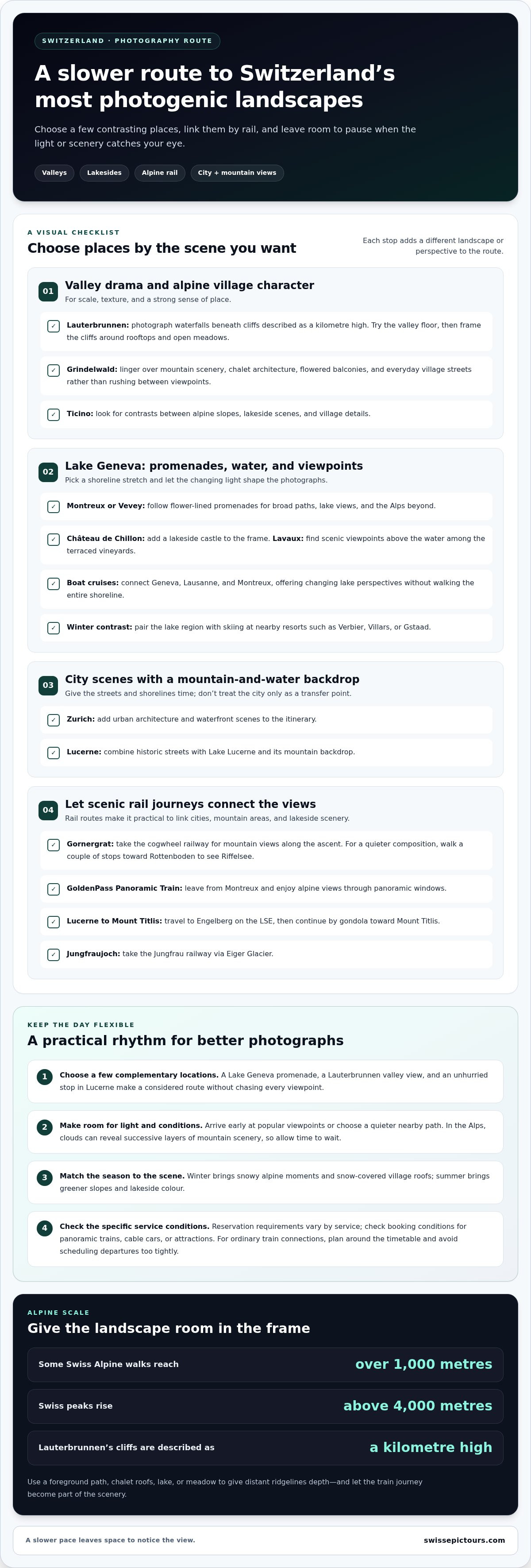
Begin in Lauterbrunnen, where waterfalls descend between cliffs described as a kilometre high. Photograph the valley from its floor, then frame the cliffs around village rooftops and open meadows. Nearby Grindelwald offers a different mood, with mountain scenery that rewards lingering instead of rushing between viewpoints. In Ticino, look for contrasts between alpine slopes, lakeside scenes, and village details. These places give your photographs distinct regional character.
Lake Geneva pairs elegant waterfront views with easy-going walks. Follow the flower-lined promenades in Montreux or Vevey for broad paths, lake views, and the Alps beyond. Château de Chillon brings a lakeside castle into the frame, while the terraced Lavaux vineyards offer scenic viewpoints above the water. Boat cruises connect Geneva, Lausanne, and Montreux, so you can enjoy changing perspectives without walking the entire shoreline.
For a slower day, choose one stretch of promenade and pause as the light changes across Lake Geneva. Montreux and Vevey suit gentle lakeside walks, while Geneva adds city scenes beside the water. In winter, pair the lake region with skiing at nearby resorts such as Verbier, Villars, or Gstaad. These seasonal contrasts make the landscape especially varied, from calm waterfronts to snow-covered slopes.
Zurich adds urban architecture and waterfront scenes to a photography itinerary, while Lucerne pairs historic streets with Lake Lucerne’s mountain backdrop. Give each city time for its streets and shoreline instead of treating it only as a transfer point. Switzerland’s train connections link major cities with mountain resorts, making it practical to travel between Geneva, Zurich, Lucerne, and alpine scenery without planning every day around a drive.
To capture Switzerland’s beauty without stress, select a few locations that complement one another. A Lake Geneva promenade, a Lauterbrunnen valley view, and an unhurried stop in Lucerne make for a more considered route than chasing every viewpoint. Let train journeys connect the regions, and leave time to linger over the photographs you came to make.
2. Swiss Alps, glacier lakes, and mountain scenery
Some Swiss Alpine walks reach over 1,000 metres, while peaks rise above 4,000 metres. That scale gives mountain photographs natural depth: foreground paths, chalet roofs, and distant ridgelines. Choose a viewpoint with a lake or meadow in front, then wait for clouds to reveal successive layers. At Zermatt, Gornergrat is accessible by cogwheel railway, with mountain views unfolding along the ascent. For a quieter composition, walk a couple of stops toward Rottenboden to see Riffelsee.
Rail connections make alpine exploration practical without turning every journey into a drive. The GoldenPass Panoramic Train leaves Montreux, offering alpine views through its panoramic windows. From Lucerne, travel to Engelberg on the LSE before continuing by gondola toward Mount Titlis. To reach Jungfraujoch, take the Jungfrau railway via Eiger Glacier. These routes make the journey part of the scenery, linking cities and resorts through a steady sequence of mountains, valleys, and lakes.
Reservation requirements depend on the specific service. Check the booking conditions for the panoramic train, cable car, or attraction you plan to visit, then arrange any available dated seat or timed entry before building the day around it. For ordinary train connections, plan around the timetable and leave room to enjoy stops instead of scheduling departures too tightly.
Swiss villages offer more than postcard facades. In places such as Grindelwald, chalet architecture, flowered balconies, and everyday streets give mountain photographs a human scale. Pause near a village centre to capture shopfronts, walking routes, and peaks in one frame. In cities, notice how local routines meet the landscape: Lucerne’s streets lead toward Lake Lucerne, while its waterfront frames the surrounding mountains. These details make a visit feel grounded, not just scenic.
For mountain scenery with less logistical juggling, a Swiss Alps private tour can connect alpine viewpoints with nearby villages and lakes. Choose a route that leaves time for walking and photographs, rather than treating every stop as a quick pass-through.
3. When is the best time to visit Switzerland for beautiful scenery and fewer crowds?
Choose your season according to the scenery you most want to photograph. Switzerland shifts from snowy alpine moments to green summer lakesides, so the same region can feel entirely different throughout the year. Winter suits crisp mountain silhouettes and snow-covered village roofs; summer brings greener slopes and lakeside colour. The best fit depends on whether you’re seeking a dramatic winter scene or a softer, brighter landscape.
To find fewer people in your frames, plan around timing and location as well as season. Popular viewpoints can draw visitors whenever conditions are especially appealing, so arrive early in the day or choose a quieter nearby path. At Lake Geneva, walk beyond the busiest waterfront areas before settling on a composition. In the Alps, a village lane or less prominent viewpoint can offer a more intimate image than a famous lookout.
Build your itinerary around a seasonal highlight. If snow is central to your photographs, choose an alpine destination and keep your plans flexible so you can enjoy clear views when they appear. If you prefer green scenery, give lakeside paths and open landscapes more space in the schedule. Montreux offers a lakeside setting, while Lucerne combines city scenes with a mountain-and-water backdrop. Focus on one region at a time instead of crossing the country for every seasonal highlight.
For a relaxed photography day, choose the location first, then shape the hours around the light and atmosphere you want. Leave room to pause when clouds soften a mountain view or evening colour settles over a lake. Train connections between Swiss cities and mountain resorts can support a measured itinerary, with fewer plans competing for your attention. A thoughtful seasonal choice makes capturing Switzerland’s beauty without stress less about chasing every view and more about seeing one landscape well.
The Lavaux vineyards are terraced above Lake Geneva and make a scenic setting for a wine tasting or lunch. An unhurried stop can complement a scenery-focused itinerary, leaving time to enjoy the landscape instead of rushing between viewpoints. Both options suit a slower pace and keep the day centred on experiencing a place.
The author spent a day relaxing in Geneva after visiting Zermatt, another example of making time to pause between destinations.
4. How do Swiss mountain weather, seasonal closures, and altitude affect travel plans?
Mountain conditions can quickly change the character of a day. A clear view around Lucerne may give way to cloud on Mount Pilatus, while wind or rain can make exposed viewpoints less inviting. Before setting out, check the forecast for your actual destination, not just the nearest city. Pack an extra layer and keep a lower, sheltered alternative in mind, such as a lakeside walk near Lucerne.
Seasonal access also shapes mountain itineraries. Cable cars, mountain railways, walking paths, and attractions may have different operating periods or pause for maintenance. Before travelling to Mount Titlis or Jungfraujoch, check the day’s operating information and plan around the services running then. A nearby village or city offers a useful alternative if a planned high-altitude visit isn’t operating.
Altitude affects both the view and the effort required to enjoy it. A route that feels comfortable near a lake may feel more demanding higher on the mountain, especially when the path climbs steeply. Choose walking routes that suit your pace, take breaks, and avoid scheduling several strenuous outings back to back. Around Zermatt, for example, a railway-accessible viewpoint can offer a mountain experience without making the whole day a long climb.
For photographs, changing weather can transform the scene: mist softens ridgelines, while breaks in the cloud reveal peaks and glacier lakes. Keep your camera ready, but don’t make a single viewpoint the only purpose of the day. A flexible plan might pair a high mountain excursion with a town visit, allowing you to shift focus if visibility changes. Check transport timings too, so a change of plans doesn’t leave you rushing for the return journey.
For a mountain itinerary shaped around your preferred pace, plan a Swiss Alps visit with a route that balances viewpoints, transport, and time to explore.
The Swiss Travel Pass provides unlimited access to panoramic trains, buses, and boats across Switzerland. The flower-lined promenades in Montreux and Vevey offer wide paths and mountain views for gentle walks along Lake Geneva.
Swiss Epic Tours: Multi-day Grand Tour of Switzerland
Swiss Epic Tours offers the Multi-day Grand Tour of Switzerland for travellers who want to experience several regions without arranging every visit themselves. Its tailor-made, private, driver-guided tours can bring alpine landscapes, historic towns, and lakeside scenery together in a considered itinerary. Choose this option for a wider-ranging journey; for a shorter stay, private day tours in Switzerland or a Zurich City Tour may suit your plans better.
The route and pace can be shaped around the places you most want to see, leaving time to enjoy the scenery instead of treating every stop as a rushed photo opportunity. Train connections can remain part of a relaxed Swiss itinerary, while private tours offer another way to explore selected destinations.
Contact Swiss Epic Tours to discuss a Swiss journey shaped around your interests.
Let Your Swiss Journey Take Shape
The most memorable photograph often begins with a choice: what do you want the day to feel like? A quiet lakeside morning, an unhurried city stroll, or the grandeur of an alpine landscape each calls for a different pace. Let that preference guide your route, and leave room for an unexpected view to become the highlight.
For capturing Switzerland’s beauty without stress, make the journey itself part of the experience. Swiss Epic Tours offers a Multi-day Grand Tour of Switzerland for a wider-ranging itinerary, a Zurich City Tour for an urban focus, and Swiss Alps private tours for mountain scenery. Choose the kind of exploration that suits your plans, then shape the details around the places you most want to experience.
Explore a Swiss journey with Swiss Epic Tours, and start imagining the landscapes you’ll remember long after the trip.
Frequently Asked Questions
How can you plan a relaxed Switzerland itinerary without rushing between destinations?
Choose a small number of overnight bases, then arrange nearby experiences as day trips. For example, stay in Lucerne and devote separate outings to the old town and a mountain excursion instead of changing hotels between them. Pick one priority for each day, keep other plans optional, and use train connections to avoid making every transfer another tightly scheduled sightseeing stop.