
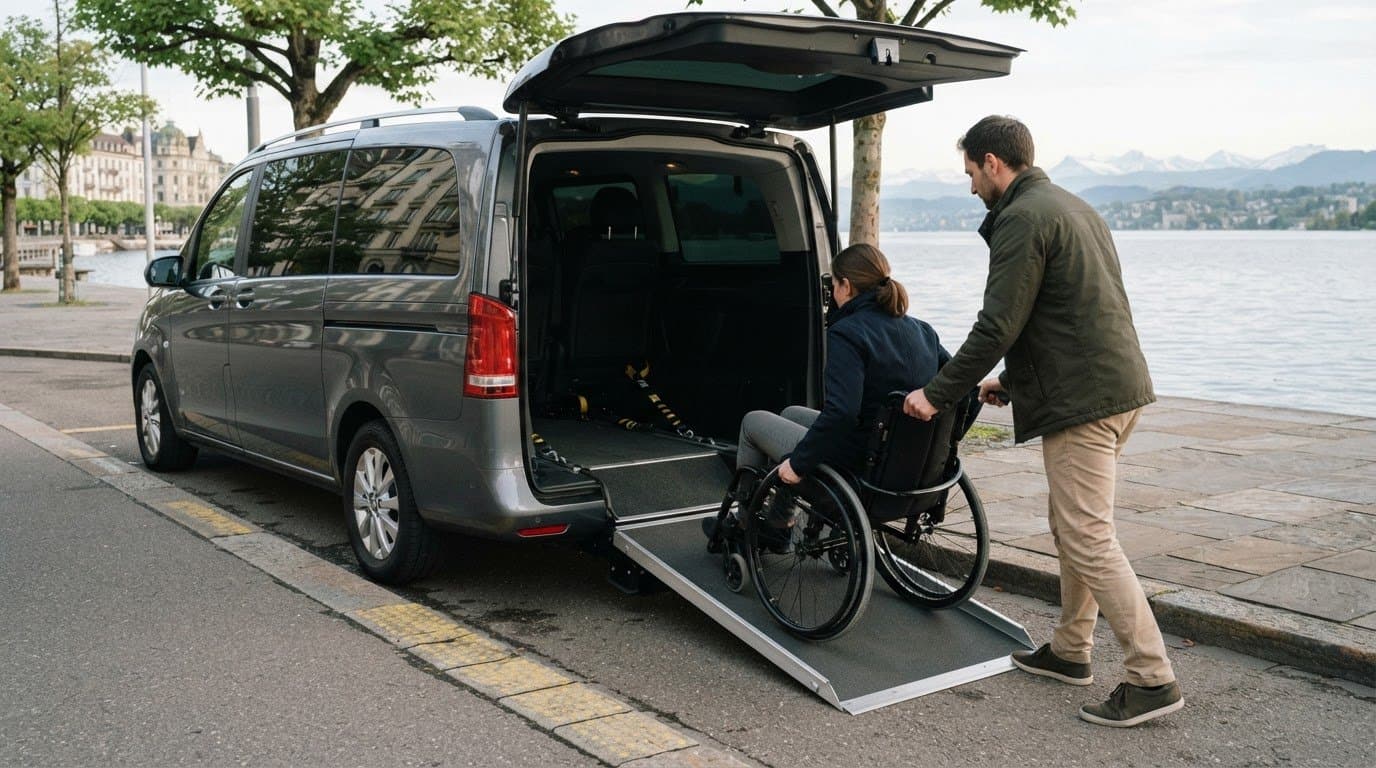
A barrier-free destination is more than a step-free train platform. For barrier-free Switzerland travel, it means considering access across the whole journey: most public transport stations have ramps or lifts to platforms, and trains and buses have low-floor coaches to make boarding easier. Accessibility can also shape where you stay and which experiences you choose.
Switzerland’s mountain scenery, historic streets and lakeside towns can all feature in a thoughtfully planned trip. For barrier-free Switzerland travel, practical details matter, from boarding support and vehicle access to routes through alpine landscapes and city centers.
This guide explains what barrier-free travel means in practice and how to plan around individual access needs. It covers transport options, support services, and accessible city and mountain experiences to help you make informed choices and shape a comfortable, personal journey.
Key Takeaways
- Understand what barrier-free travel can involve, from station access to boarding trains and buses, and why access needs vary by route.
- Learn which support services can help with boarding assistance, disability transport and practical arrangements during your trip.
- Explore how adapted car travel can fit into an itinerary when public transport doesn’t suit every leg of the journey.
- Find ways to plan accessible mountain and city experiences, with private tours as an option for a more tailored Swiss journey.
1. What are "barrier-free destinations"?
A barrier-free destination considers the whole journey, not just the entrance to a hotel. For barrier-free Switzerland travel, plan access across transport, accommodation and activities. Most public transport stations have ramps or lifts to platforms, while trains and buses have low-floor coaches. Routes and boarding arrangements still vary, so plan each connection around the traveler’s wheelchair and transfer needs.
Cable cars and ships can make for memorable alpine and lakeside experiences, but access depends on the route and boarding arrangements. Consider the station or landing point, vehicle entrance, space onboard and facilities at the destination. Then build a train, boat or wheelchair-taxi itinerary around the traveler’s needs.
Claire & George’s Accessible Tour of Switzerland brings travel and support planning together. The foundation connects travelers with hotels and providers of outpatient care and support services. The tour presents Switzerland in ten stages, developed with 14 tourist destinations, and offers a long itinerary lasting 15 days or shorter tours from 7 days.
An accessible holiday can combine cities, lakes and mountain regions rather than relying on a single feature. The Accessible Switzerland Tour combines barrier-free mountain experiences with city walking tours. Switzerland’s accessible tourism selection also highlights offers for guests with sensory impairments and mental or cognitive disabilities. These examples show how barrier-free Switzerland travel can address different access needs.
Hotels, restaurants and public toilets are not automatically accessible. Before adding a stop to your route, use accessible tourism information to check details such as step-free entrances, lifts, room layouts and wheelchair-accessible toilets.
Travel cards, discounts and companion fares depend on the ticket and eligibility conditions for each journey. Plan fare arrangements separately from boarding support, and check them for each train, boat or cable-car leg.
2. Support services for travelers with disabilities
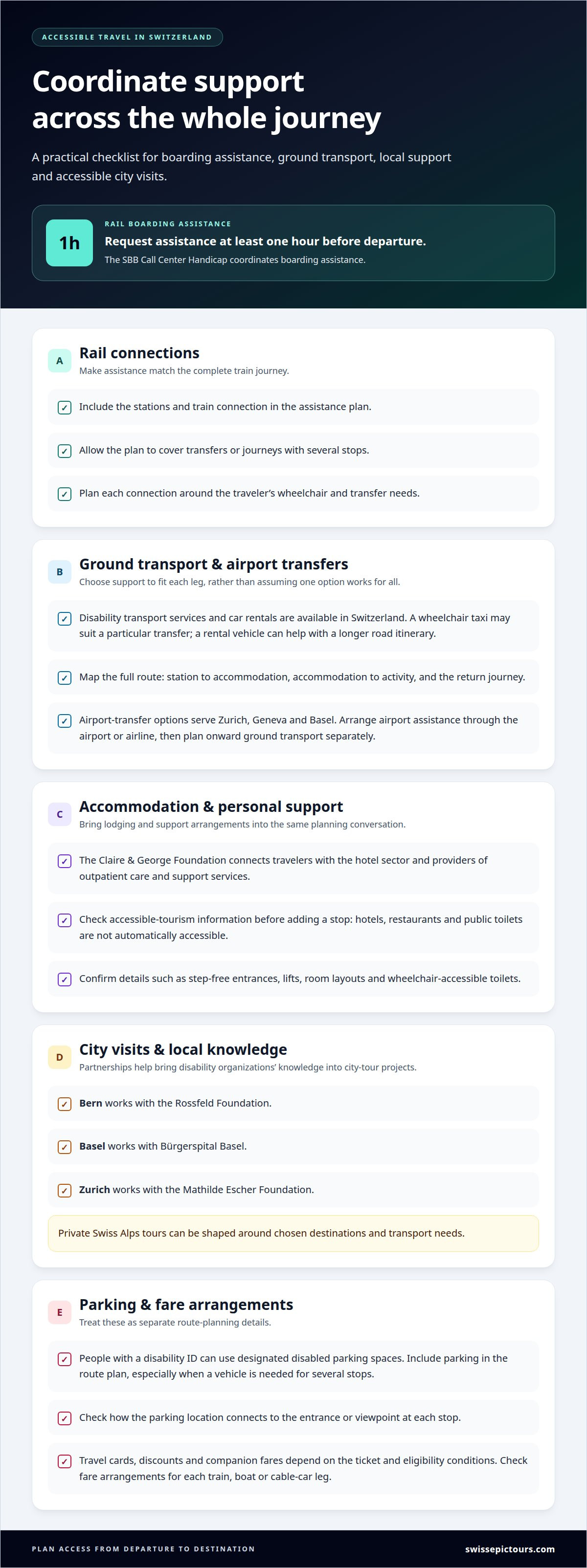
For rail journeys, the SBB Call Center Handicap coordinates boarding assistance. Request it at least one hour before departure. Include the stations and train connection in your plan so assistance aligns with the full journey, particularly when it involves transfers or several stops.
Disability transport services and car rentals are available in Switzerland and can connect places where rail travel does not suit your itinerary. Plan the full route: station to accommodation, accommodation to an activity, and the return journey. A wheelchair taxi may suit a particular transfer, while a rental vehicle can help with a longer road itinerary.
Some organizations help travelers connect with local services. The Claire & George Foundation links guests with the hotel sector and providers of outpatient care and support services. This can bring accommodation and personal support into the same planning conversation rather than treating them as separate arrangements.
Disability organizations also contribute to accessible city-tour projects. Bern works with the Rossfeld Foundation, Basel with Bürgerspital Basel, and Zurich with the Mathilde Escher Foundation. These partnerships bring local knowledge into the design of city experiences and offer useful points of reference when planning visits to those destinations.
For airport journeys, Zurich, Geneva, and Basel are served by airport-transfer options. Arrange any airport assistance through the airport or airline handling your itinerary, then plan the onward ground journey separately. A Zurich, Geneva, or Basel airport transfer can form that ground-transport leg.
People with a disability ID can use designated disabled parking spaces. Include parking in your route plan, especially if you need a vehicle for several stops. For Swiss Alps private tours, the itinerary can be shaped around your chosen destinations and transport needs, offering a private alternative to a day planned entirely around public transport.
3. Barrier-free car travel and adapted vehicles
A car can make a Swiss journey more flexible when your route includes several towns, lakeside stops or mountain valleys. For a wheelchair user, the right vehicle setup depends on how they transfer, where they sit and how their mobility equipment travels. Start with those needs, then plan the route around the vehicle and its passengers.
Break the journey into practical stages: arrival, boarding, driving, parking and reaching each destination. A day trip from a city to a lakeside viewpoint, for example, may involve a vehicle transfer, a parking area and a final approach to the stop. Mapping each stage helps identify where a vehicle adaptation matters and where another transport option may work.
Adapted vehicles differ in entry arrangements, seating and space for mobility equipment. Consider whether the traveler will remain in their wheelchair during the drive or transfer to a vehicle seat. Then account for equipment storage and space for companions. These details guide the vehicle choice more directly than the destination name alone.
For an itinerary with several stops, group nearby destinations together and allow time between longer drives. A route through Lucerne, Interlaken and the Bernese Oberland, for example, calls for attention to transfer points and stops along the way. A single scenic destination may need a simpler plan, but access from the parking area still affects the experience.
Plan parking as part of the route, not as an afterthought. Check whether designated parking spaces are available and suitable for your stop. Check how the parking location connects to each entrance or viewpoint to make stops more predictable. A wheelchair taxi can also handle a particular transfer when a rental vehicle does not suit every part of the journey.
Before setting out, coordinate the vehicle, passenger seating, wheelchair needs and order of stops. This practical overview helps you choose between adapted car travel, a wheelchair taxi or a mix of transport modes for different parts of the trip.
4. Barrier-free mountain and city experiences
Switzerland’s accessible experiences include barrier-free mountain outings and city walking tours through the Accessible Switzerland Tour. Planning barrier-free Switzerland travel can mean pairing an alpine outing with a city visit while considering access at every stop. Inclusive city tours are being developed in Bern, Basel and Zurich with local partners. In the Holiday Region Interlaken, access checks can include ramps, lifts to other levels and wheelchair-accessible toilets.
For mountain railways and scenic routes, plan every stage of the outing. Consider boarding, the station or mountain stop, and the route from the arrival point to the viewpoint or attraction. The scenic journey is only part of the experience; access to the destination and its facilities matters too.
City streets and historic sites can present different barriers. Changes in surface, steps, narrow entrances and limited turning space may affect wheelchair movement. In Bern’s historic center, a route can combine outdoor sights with indoor stops, so include entrance access and accessible toilets in your plan.
Use the Interlaken checks as a practical guide: consider ramp access, lifts between levels and toilets. Apply the same approach to every city stop, including the route from transport to the attraction. This turns barrier-free Switzerland travel into a series of specific access decisions rather than a broad label.
Accessible experiences can also support travelers with sensory impairments and mental or cognitive disabilities. Switzerland’s accessible-tourism selection aims to highlight offers for these guests. Consider which environments, information and activities suit the traveler, then choose experiences accordingly.
To plan a mountain outing around chosen stops and access needs, consider a private Swiss Alps tour. A tailored itinerary can make room for a carefully planned route through Switzerland’s dramatic mountain landscapes.
Options include barrier-free mountain outings, the Accessible Switzerland Tour and inclusive city tours being developed in Bern, Basel and Zurich. In the Holiday Region Interlaken, access checks can cover ramps, lifts and wheelchair-accessible toilets. A private Swiss Alps tour can also be tailored around chosen stops and access needs.
Swiss Epic Tours
Swiss Epic Tours creates private, driver-guided itineraries around the Swiss places you want to experience. If coordinating several destinations feels complex, a tailor-made tour brings route planning and travel preferences into one conversation. Options include private day tours, the Multi-day Grand Tour of Switzerland, a Zurich City Tour and Swiss Alps private tours.
Share the destinations that matter to you and the access considerations that shape your journey. This helps guide the itinerary discussion, whether you are drawn to city streets, alpine scenery or a longer journey across Switzerland. For detailed accessibility needs, plan around the specific transport and site features described in this guide.
For a personal conversation about your Swiss itinerary, contact Swiss Epic Tours.
Shape a Swiss journey around what matters to you
Turn your priorities into a route: decide which landscapes, towns and experiences matter most, then consider how each part of the journey will work for you. A thoughtful barrier-free travel plan for Switzerland starts with your preferences, not a standard itinerary. The pace, transport choices and stops all influence how the days feel.
Swiss Epic Tours can shape a private itinerary around the places you hope to discover. Share the destinations that inspire you and the practical considerations that guide your travel, then start planning a journey through Switzerland’s vivid cities and striking alpine scenery.
Contact Swiss Epic Tours to plan your trip, and take the first step toward a Swiss experience shaped around you.
Frequently Asked Questions
What are “barrier-free destinations”?
Barrier-free destinations consider access across activities, services and the spaces between them. The term can cover physical access as well as information and experiences suited to people with sensory, mental or cognitive disabilities. For example, an itinerary might consider whether a traveler can reach an attraction, use its facilities and understand the information provided during the visit.
What does barrier-free travel mean in Switzerland, and which accessibility standards are used?
In Switzerland, barrier-free travel means planning around a traveler’s access needs across transport, accommodation, and activities, rather than relying on one general label. Useful details include step-free routes, lifts, toilet access, and the format of visitor information. The available facts here don’t identify a particular national standard, so practical planning focuses on the specific features of each destination and service.
How accessible are Swiss trains, buses, trams, and boats for wheelchair users?
Swiss public transport access includes ramps or lifts at most stations and low-floor coaches on trains and buses. For a trip involving trams or boats, plan around the boarding point and the route from the stop or landing to your destination. An itinerary combining a city tram and a lake boat, for example, involves separate boarding and arrival points to consider.
What are the current prices and rules for accessible public transport in Switzerland?
For rail boarding assistance, travelers can request support from the SBB Call Center Handicap at least one hour before departure. Plan the travel budget separately from assistance needs, as fares depend on the journey and applicable ticket arrangements. For companion fares or discounts, the relevant ticket conditions determine what applies to the traveler and accompanying person.
Where can travelers find reliable accessibility information and maps for Switzerland?
Claire & George’s Accessible Tour of Switzerland and the Accessible Switzerland Tour are useful starting points for destination planning. The former connects travelers with hotels and outpatient care or support providers; the latter brings together accessible city and mountain experiences. Use destination information to build a route around the traveler’s priorities, such as city visits, alpine outings or support during a stay.
How accessible are taxis, rental cars, and adapted transport services in Switzerland?
Disability transport services and car rentals are available in Switzerland, and wheelchair taxis can help with particular transfers. People with a disability ID can use designated disabled parking spaces. For a journey with several stops, consider how the traveler boards, where mobility equipment goes and how each parking point connects to the destination. These needs help determine which transport arrangement fits the route.