
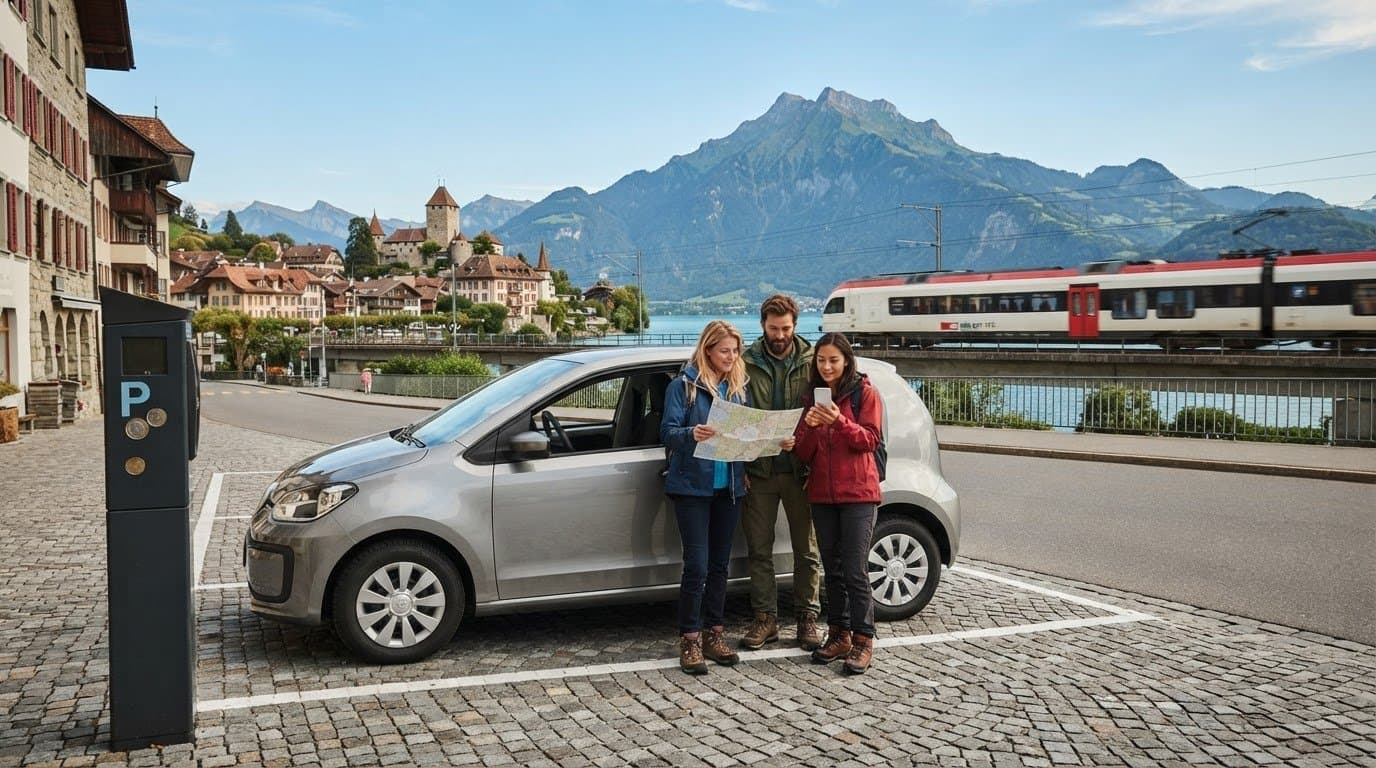
A rental car can bring Switzerland’s grandest landscapes within easy reach, but understanding why a rental car in Switzerland can be a mistake starts with looking beyond the booking price. For routes between major towns and mountain destinations, public transport may be the simpler option.
It’s easy to see the appeal of setting your own pace, stopping for a lakeside view, or carrying luggage without changing trains. The better choice depends on your route, how often you’ll drive, and whether you can reach your stops by road. This guide explains how rental costs, the vignette, fines, and parking affect your budget, then compares driving with public transport to help you choose how to explore Switzerland’s alpine scenery and historic towns.
Key Takeaways
- Look beyond the rental rate by factoring in possible extras such as additional-driver charges, insurance options and equipment.
- Swiss rental cars have a highway vignette attached, but understanding the rules and speed limits can help you avoid costly fines.
- Plan where you’ll leave the car: city parking can add up, and parking on sidewalks is illegal in Switzerland.
- Match your transport choice to your itinerary: public transport may suit town-to-town travel, while a car can be useful for road-accessible stops.
Additional fees and extras
A rental car’s base rate is the daily charge before optional extras and added fees. Drivers under 25 may also face a young-driver surcharge. Compare the full rental estimate, not just the first daily figure.
Collision and theft coverage may protect against damage or loss, subject to the rental agreement. Include both the potential excess and any credit-card hold in your travel budget.
Optional equipment and additional-driver fees can raise the rental total. Before comparing quotes, list the equipment you need, the drivers to be included, and your pickup and return locations.
Cross-border restrictions are limits in the rental contract or customs rules on taking a Swiss-registered vehicle abroad. An EU citizen cannot drive one into France, Germany, Italy, or Austria, while Swiss drivers and renters from outside the EU may do so. The European Commission advises EU citizens to tell rental companies in advance about EU travel. Mountain roads and alpine passes can also be demanding, with gradients, bends, and conditions varying by route. Choose a route that suits your driving experience and comfort. These costs and constraints help explain why a rental car in Switzerland can be a mistake for some itineraries.
Highway vignette and fines
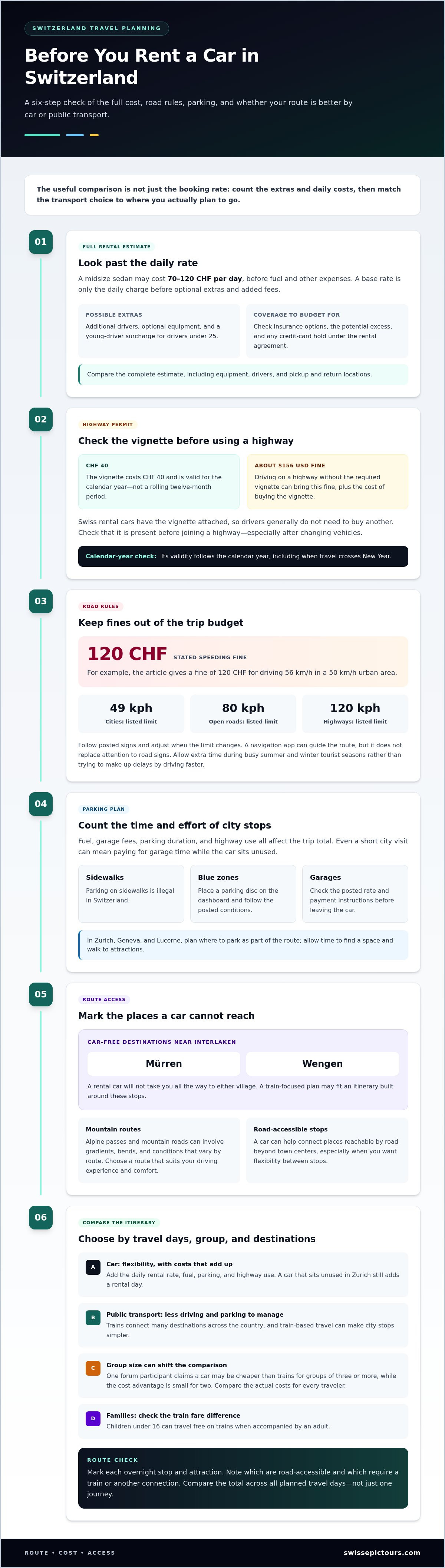
A highway vignette is the toll permit required to use Swiss highways. It costs CHF 40 and is valid for the calendar year. Swiss rental cars have the vignette attached, so drivers generally don’t need to buy another for that vehicle. Before joining a highway, look for the vignette on the car and confirm it’s present. If a vehicle has no vignette, drivers must purchase one separately before using Swiss highways.
A vignette fine is the penalty for driving on a Swiss highway without the required permit. The stated fine is approximately $156 USD, in addition to buying the vignette. That makes a quick check worthwhile, particularly when collecting a car in a busy airport or changing vehicles during a trip. Keep the calendar-year validity in mind when planning travel across New Year: the permit’s validity follows the calendar year, not a rolling twelve-month period.
A speeding fine is a penalty for exceeding the posted limit. For example, driving 56 km/h in a 50 km/h urban area incurs a stated fine of 120 CHF. Switzerland’s listed limits are 49 kph in cities, 80 kph on open roads, and 120 kph on highways. Follow posted signs and adjust your speed when the road limit changes. A navigation app can help with route guidance, but it shouldn’t replace attention to road signs.
Before setting off, make a quick check: confirm the vignette is attached, review speed limits along your route, and watch for changes between town roads and highways. Swiss highways may be busiest during the summer and winter tourist seasons, so allow extra time instead of trying to make up delays by driving faster. The vignette covers a fixed calendar year, but driving without one or receiving a speeding penalty can make a short trip costly. If your plans focus on towns and mountain destinations, compare the route with alternatives that involve less driving.
Parking costs and rules
Parking adds expense and planning to city stops in Switzerland. Include fuel, garage fees, and the highway vignette when estimating your trip budget.
Parking rules
Swiss parking rules set where you may leave a vehicle and what you need to display. Parking on sidewalks is illegal. In blue zones, place a parking disc on the dashboard and follow signs for the permitted conditions. Read the nearby instructions before leaving the car, and set the disc as directed. Even in a valid space, check the local signs.
Driving and parking in Swiss cities
Driving and parking in cities means navigating urban streets and finding a permitted space near your destination. In Zurich, Geneva, and Lucerne, plan where you’ll park as part of your route instead of assuming you can leave the car beside each attraction. Allow time to find a space and walk from there.
Fuel, parking, and highway tolls in Switzerland depend on distance, parking duration, and highway use. The highway toll is the CHF 40 calendar-year vignette discussed above.
For a practical estimate, map your driving distances and account for how long the car will stay parked at each stop. Even a short city visit can mean paying for garage time while the vehicle sits unused. Compare the total with an itinerary involving fewer city drives, especially if your plans focus on Zurich, Geneva, or Lucerne. In a blue zone, remember the parking disc; in a garage, check the posted rate and payment instructions before you leave. These steps help you decide whether a car offers useful freedom or adds another task to manage.
Rental car versus public transport
Comparing a rental car with public transport means weighing flexibility against the full cost and accessibility of each route. In Switzerland, the best fit depends on your group, destinations, and how often you’ll drive.
A midsize sedan rental may cost 70 to 120 CHF per day, before fuel and other expenses. Public transport avoids driving and parking tasks, while trains connect many destinations across the country. Compare your planned travel days, not just one journey. A car that sits unused in Zurich still adds a rental day, while a train-based itinerary can make city stops simpler.
Group size can change the calculation. One forum participant claims a car may be cheaper than trains for groups of three or more, while the cost advantage is small for two people. Treat that as a prompt to compare your own itinerary: add the rental’s daily rate, fuel, and parking, then compare fares for every traveler. Children under 16 can travel free on trains when accompanied by an adult, which can shift the balance for families.
Access matters as much as price. Mürren and Wengen, popular destinations near Interlaken, are car-free, so a rental won’t take you all the way to either village. A train-focused plan may suit an itinerary built around these destinations, while a car can help connect road-accessible stops beyond town centers. Mark each overnight stop and attraction on your route, then note which require a train or another connection.
Use this quick decision test: choose a car when your itinerary includes several road-accessible stops and the group shares its costs; favor public transport for city-to-city travel, family train trips, or car-free villages. For a more personal way to experience Switzerland’s landscapes, explore a tailored Swiss tour.
Swiss Epic Tours: Multi-day Grand Tour of Switzerland
Swiss Epic Tours offers the Multi-day Grand Tour of Switzerland for travelers who want to explore the country without managing every drive, parking stop, and route change themselves. It suits plans spanning several regions, where the journey matters as much as each destination. Rather than coordinating a self-drive itinerary, enjoy Switzerland’s lakes, historic towns, and alpine scenery on a tailor-made, driver-guided tour.
For a shorter stay, a Zurich City Tour or private day tour can suit plans focused on one place. Swiss Alps private tours offer a personal way to explore mountain landscapes. Choose according to your route and how much time you want to spend traveling between stops.
Contact Swiss Epic Tours to discuss a Swiss itinerary tailored to your plans.
Choose the journey that fits your Swiss escape
The best way to travel is the one that lets you stay present, whether you’re following a lakeside route or arriving beneath a dramatic alpine summit. Understanding why a rental car in Switzerland can be a mistake isn’t about rejecting the open road. It’s about choosing how you want to spend your time. Let your destinations, preferred pace, and comfort with independent driving shape your plans.
Swiss Epic Tours offers the Multi-day Grand Tour of Switzerland, Zurich City Tour, and Swiss Alps private tours for travelers who would rather not coordinate every leg themselves. Each option offers a different way to experience Switzerland’s landscapes and towns, with the journey shaped around the kind of trip you have in mind.
When you’re ready to plan, contact Swiss Epic Tours to explore an itinerary that suits your Swiss adventure. A thoughtful route can make the country feel wonderfully close.
Frequently Asked Questions
How much does it cost to rent a car in Switzerland, including insurance and fees?
Fuel, taxes, location fees, optional coverage, equipment, and additional drivers can increase the total. Swiss rates include fire and third-party liability insurance, but collision and theft coverage may leave an excess. A deposit hold can also reduce your available credit, even if it isn’t a final charge.
Does Switzerland require a motorway vignette for rental cars, and how much does it cost?
Yes, Swiss highways require a vignette, which costs CHF 40 and is valid for the calendar year. Rental cars have the vignette attached, but check the vehicle before joining a highway. If it’s missing, buy one before driving on Swiss highways. Driving without one can result in a fine of approximately $156 USD, in addition to the vignette purchase.
What are Switzerland's driving rules for tourists, including winter tires and speed limits?
Follow posted signs and drive within the listed limits: 49 kph in cities, 80 kph on open roads, and 120 kph on highways. Winter conditions can make alpine routes more demanding, so choose tires and routes suited to the weather. Trams have the right of way, and passing is forbidden where double white lines mark the road. Allow extra care on unfamiliar roads.
How reliable and extensive are Swiss trains compared with driving between tourist destinations?
Trains are a practical way to connect tourist destinations without managing city driving or parking. A car offers flexibility between road-accessible stops, but cannot take you into car-free places such as Mürren and Wengen near Interlaken. Compare each stop on your itinerary: rail travel may suit journeys between towns, while driving can connect destinations accessible by road.
Can visitors reach Swiss villages and mountain resorts by public transport without a car?
Yes. You can visit car-free destinations such as Mürren and Wengen without driving into the villages. Plan your route around public transport connections and allow for the final leg between a transport stop and your accommodation or activity. This works particularly well when a destination restricts car access, and avoids having to find parking where a vehicle cannot reach the village.
What rental car insurance exclusions or deposit requirements are common in Switzerland?
Treat the excess as potential responsibility and the deposit as temporarily unavailable credit. They are not the same charge.