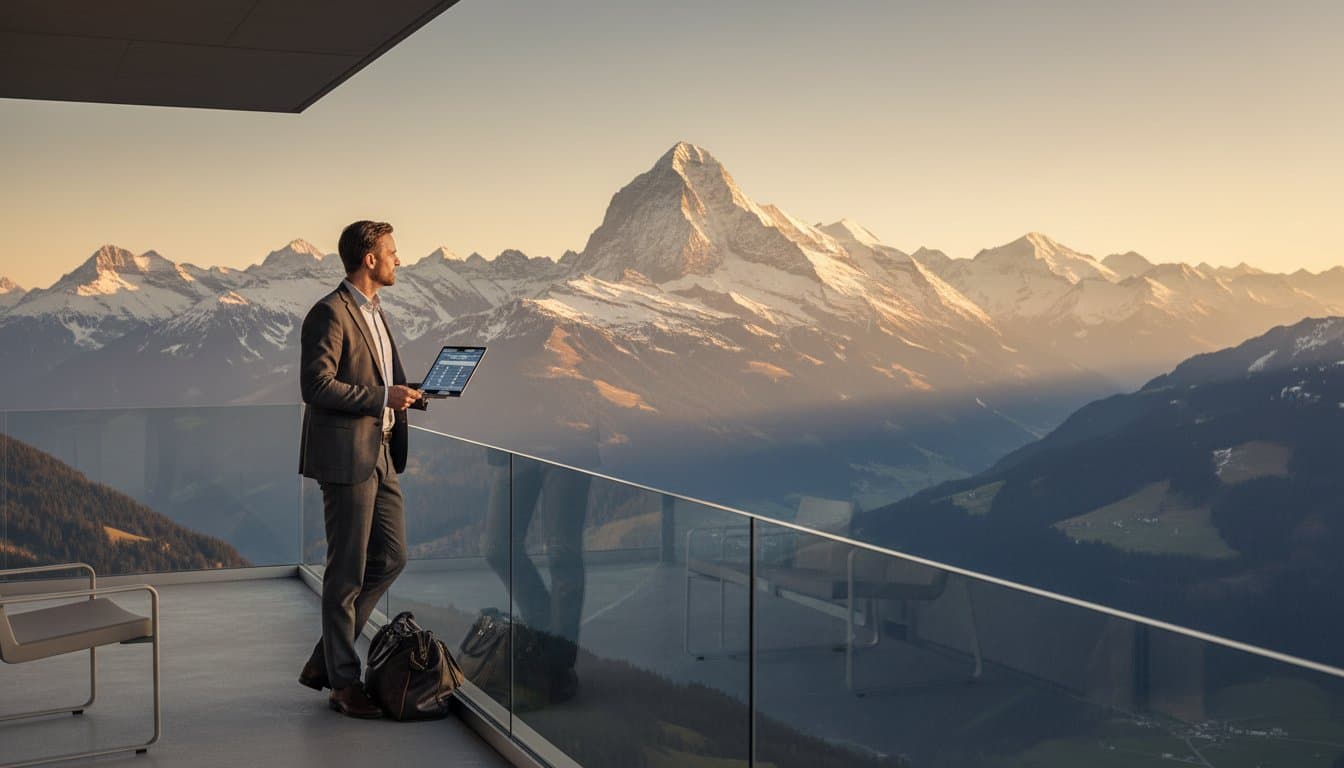
Imagine standing before the Eiger's north face, where the air is so crisp it feels like silk against your skin. You've planned every detail of your luxury escape, yet a single cultural misstep or a missed logistical detail can break the spell of this pristine landscape. Knowing exactly what not to do when visiting switzerland is the difference between feeling like a guest of honor and feeling like a frustrated outsider. It's about more than just avoiding a faux pas; it's about protecting the soul of your journey.
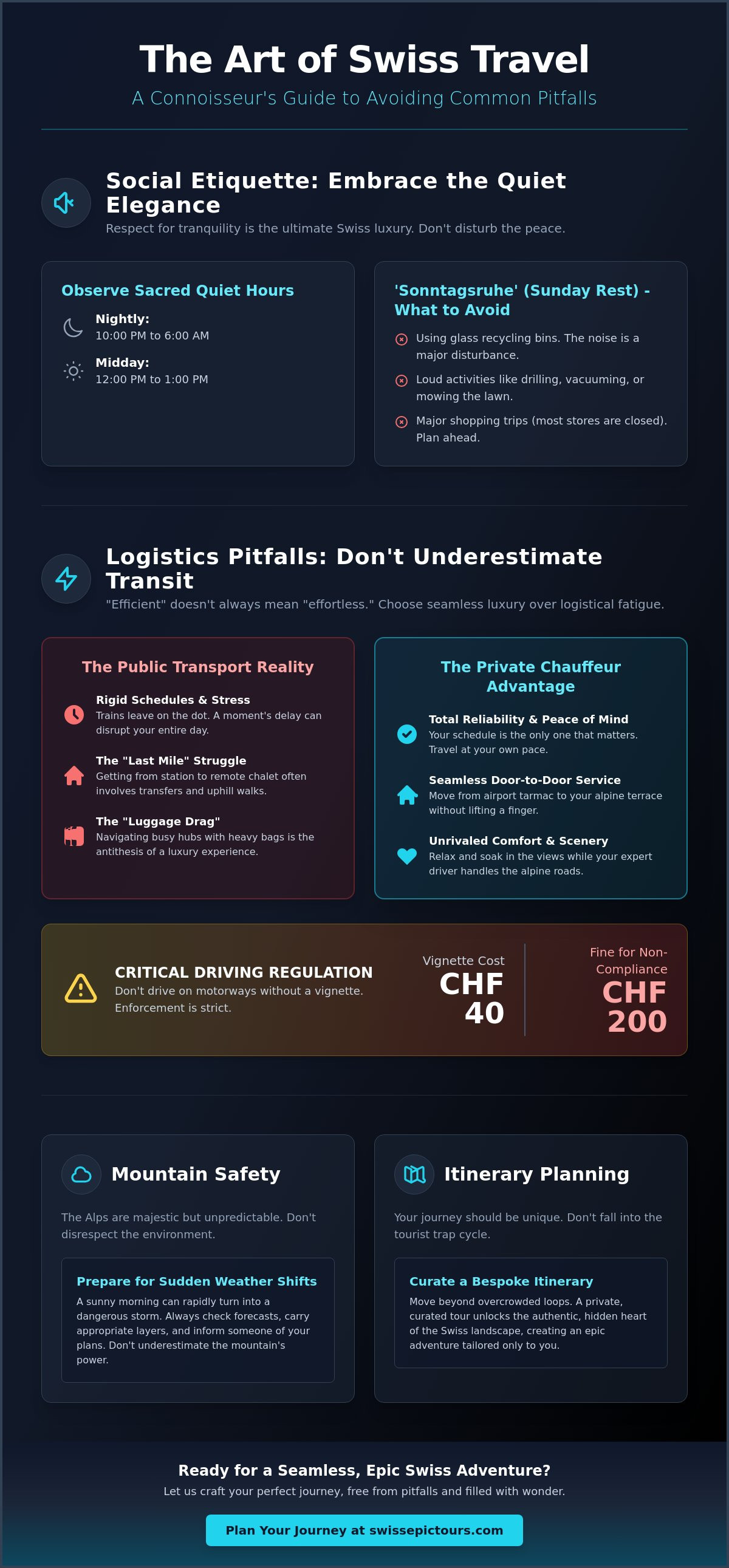
You likely want your Swiss escape to be a seamless blend of world-class hospitality and breathtaking mountain vistas. This guide promises to transform your trip into a stress-free, epic adventure by highlighting the pitfalls that catch even the most seasoned travelers off guard. We'll preview the essential 2026 regulations, including the CHF 200 fine for driving without a CHF 40 motorway vignette and the strict quiet hours observed from 10 pm to 6 am. Prepare to navigate the Alps with the confidence of a local connoisseur.
- Embrace the quiet elegance of local life by mastering 'Sonntagsruhe' and learning exactly what not to do when visiting switzerland to ensure a respectful, seamless stay.
- Elevate your journey by choosing private, door-to-door transportation instead of the logistical fatigue that comes with navigating complex train schedules and heavy luggage.
- Protect your Alpine experience by understanding how to prepare for the sudden, dramatic weather shifts that can turn a sunny morning into a dangerous mountain storm.
- Avoid the "tourist trap" cycle by curating a bespoke itinerary that moves beyond the overcrowded loops and into the authentic, hidden heart of the Swiss landscape.
Social Etiquette: Don't Disturb the Swiss 'Sonntagsruhe'
The silence of a Swiss morning is an exquisite gift. It's a curated stillness that allows the chime of distant cowbells to drift across emerald valleys. To step into this majestic landscape is to enter a world where tranquility is a shared luxury. Understanding the local rhythm of rest is the first step in mastering what not to do when visiting switzerland. The concept of 'Sonntagsruhe' is the heartbeat of Swiss life; it's a day of absolute rest that transforms the country every Sunday.
This deep respect for order is a pillar of Swiss culture and etiquette, where collective peace is prioritized over individual noise. It isn't just about avoiding a social gaffe. It's about earning the respect of your hosts. Whether you're in a chic Zurich loft or a rustic Alpine chalet, the rules of volume and presence remain consistent. Your journey should be a silent symphony of awe, not a loud intrusion on local life. Your journey, your way, begins with silence.
The Unspoken Rules of Sunday in Switzerland
Sunday is a sanctuary. In Switzerland, the 2026 regulations continue to emphasize that Sundays and public holidays are quiet days. Most shops are closed, so your bespoke itinerary should favor mountain walks over city shopping. Avoid these specific activities to remain a welcome guest:
- Don't use the glass recycling bins. The clatter of bottles is considered a major disturbance on a day of rest.
- Avoid loud activities like heavy cleaning or using power tools if you're staying in a residential neighborhood.
- Plan your grocery needs ahead of time, as retail centers are largely shuttered outside of major train stations.
Mastering the Art of Swiss Public Presence
The Swiss value personal space and low-key interactions. This isn't coldness; it's a sophisticated form of respect. When you're on public transit or in a restaurant, keep your voice at a level that doesn't breach the personal bubble of those around you. Observe the general quiet hours from 10 pm to 6 am, and remember the midday quiet hour from 12 pm to 1 pm. These windows are sacred. If you're dining, wait for other guests to finish before engaging in boisterous celebrations. A simple 'Grüezi' or 'Bonjour' when entering a boutique or boarding your private transfer sets the stage for world-class hospitality. It signals that you're a connoisseur of their culture, not just a visitor passing through. Always ask for permission before photographing locals or their private homes in scenic villages. Privacy is the ultimate Swiss luxury.
Logistics Pitfalls: Don't Underestimate the Complexity of Transit
The Swiss rail network is a marvel of clockwork precision and alpine engineering. However, for the traveler seeking a truly unrivaled experience, relying solely on public infrastructure can be a subtle trap. To understand what not to do when visiting switzerland, one must recognize that "efficient" does not always mean "effortless." While the trains are world-class, they often lack the intimacy and bespoke care required for a truly legendary journey.
Punctuality here is not a suggestion; it's a cultural mandate. "Swiss time" means arriving at least five minutes before your departure. If a train is scheduled for 14:03, the doors seal at 14:02. This rigid schedule creates a baseline of stress that can detract from the majestic views outside your window. Your journey should be defined by the rhythm of your own heart, not a station master's whistle. Beyond the ordinary, your travel should feel like a curated flow, not a race against a clock.
Public Transport vs. Private Chauffeur: A Reality Check
The "luggage drag" is the single most common complaint among international visitors. Navigating sprawling transit hubs like Zurich Hauptbahnhof while managing heavy, high-end luggage is the antithesis of a VIP experience. While navigating the Swiss Travel Pass offers access to the entire country, it doesn't solve the "last mile" struggle. Getting from a remote mountain station to your exclusive chalet often involves multiple transfers and uphill walks. Choosing luxury travel Switzerland ensures your transition is seamless. A private, door-to-door transfer allows you to move from the tarmac to the terrace without ever lifting a finger. It's about total reliability.
The True Cost of a 'Self-Drive' Adventure
The allure of the open road is strong, but the reality of Swiss driving is demanding. Narrow mountain passes with dizzying hairpin turns require absolute focus, leaving little room to admire the breathtaking scenery. Speed enforcement is legendary for its strictness; even a minor violation can result in heavy penalties. For 2026, every vehicle on the motorway must display a vignette. Forgetting this CHF 40 sticker results in an immediate CHF 200 fine. Parking in historic city centers is equally challenging, with scarce spots and high hourly rates that can disrupt your peace of mind. To truly immerse yourself in the soul of the Alps, consider a private guided tour that lets you be the spectator of the epic, not the navigator of the mundane.
Mountain Safety: Don't Disrespect the Alpine Environment
The Swiss Alps are a masterclass in raw, untamed beauty. Standing at the foot of a majestic glacier, you feel the ancient, silent power of the earth. But this unrivaled majesty demands a specific kind of humility. A critical part of knowing what not to do when visiting switzerland is underestimating the terrain. The "Instagram vs. Reality" trap is a genuine danger for the unprepared. We often see digital snapshots of travelers in flowing dresses or light sneakers on rocky ridges. In reality, flip-flops are a severe hazard on mountain paths. One slip on loose shale can end an epic journey before it truly begins. Your safety is the foundation of your luxury experience.
Weather in the high Alps is notoriously volatile. A morning that begins with golden sunlight and still air can transform into a thunderous, gray storm by mid-afternoon. Temperatures can drop by 20 degrees in less than an hour. This unpredictability is why the Government of Canada travel advice emphasizes extreme caution for adventure tourists. Always check the local MeteoSwiss app before you set foot on a trail. Even a sunny forecast requires a plan for sudden shifts. Beyond the ordinary, a prepared traveler is a relaxed traveler.
Essential Gear for the Swiss Alps
Your equipment is your lifeline in the high peaks. Sturdy, broken-in hiking boots are non-negotiable for any summit visit. Don't let a blister ruin a curated experience. We recommend the 'onion principle' for dressing. This method of layering allows you to adapt to the 20-degree temperature swings between the valley floor and the mountain top. While digital tools are convenient, GPS signals can fail in deep valleys or along high ridges. Carry a physical map. It is the hallmark of a sophisticated local connoisseur.
Respecting the High-Altitude Code
The Swiss trail system is a model of legendary precision. Yellow markers signify gentle, paved or gravel hiking paths. White-red-white trail markers indicate challenging mountain terrain that requires sure-footedness and a steady head for heights. Blue markers are reserved for alpine routes where specialized gear and expert knowledge are essential. Never leave the marked path. The alpine flora is fragile and the terrain is deceptive. Before every ascent, check the status of Rega, the Swiss air rescue service. Altitude sickness is another silent risk that ignores physical fitness. Hydrate frequently and pace yourself. Drink twice as much water as you think you need. Your journey should be a steady ascent into awe, not a rushed climb into exhaustion.
Dining and Shopping: Don't Make These Costly Mistakes
Savoring an artisanal chocolate truffle or sharing a pot of creamy, melted fondue is a sensory highlight of any high-end journey. However, even the most refined palates can be caught off guard by local customs. To truly understand what not to do when visiting switzerland, you must look beyond the menu and into the cultural rhythm of the table. Swiss dining is a curated experience defined by precision and tradition. Misinterpreting these unspoken rules can lead to unnecessary costs or a lapse in the seamless elegance you expect from a VIP adventure.
Timing is everything in the Alps. A common logistical pitfall is seeking a hot, chef-prepared meal at 3 PM. In many regions, particularly outside the busiest city centers, kitchens close their doors between 2 PM and 6 PM. If you miss this window, you'll often find yourself limited to cold snacks or waiting for the evening service to begin. Planning your day around these culinary rhythms ensures your journey remains a steady stream of delights rather than a search for sustenance. Your journey, your way, requires a connoisseur’s timing.
The Swiss Approach to Tipping and Payments
In Switzerland, the law mandates that service is included in the price of your meal. This 'Service Compris' means you don't need to calculate a massive 20% gratuity at the end of the night. Rounding up the bill to the nearest five or ten francs is the standard practice for exceptional hospitality. A 10% tip is considered very generous and is usually reserved for unrivaled service in the most exclusive establishments. For a deeper look at managing your travel investment, see our guide on planning a trip to Switzerland 2026. While cards are widely accepted, always carry some Swiss Francs for small mountain huts or artisanal shops that value the personal touch of cash.
Hydration and Local Sustenance
Buying bottled water in Switzerland is often considered a culinary and environmental crime. The country boasts some of the world's most pristine tap water, often of higher quality than expensive bottled brands. Look for the 'Eau Potable' signs on village fountains to refill your bottle with crisp, glacial water for free. This practice aligns with the country's high recycling standards, where littering in cities like Zurich or Geneva can result in fines ranging from CHF 100 to CHF 300. When you finally sit down for fondue, remember the local code: drink only hot tea or a crisp white wine. Cold drinks are believed to interfere with the digestion of the cheese, a tradition every local storyteller will remind you of. If you're preparing for a private excursion, remember that Saturday is the final shopping rush. Most supermarkets require you to weigh and label your produce at a station before reaching the checkout. Forgetting this small step can disrupt the legendary Swiss efficiency of the queue. To ensure every detail of your stay is handled with effortless excellence, consider booking a private guided experience that navigates these nuances for you.
Itinerary Planning: Don't Fall into the 'Tourist Trap' Cycle
The allure of the Swiss landscape is often distilled into a few famous images: the chapel bridge of Lucerne, the turquoise waters of Interlaken, and the pyramid peak of the Matterhorn in Zermatt. While these icons are undeniably beautiful, tethering your entire journey to this well-trodden loop is a common mistake. If you want to understand what not to do when visiting switzerland, start by questioning the "must-see" lists that lead to overcrowded platforms and rushed schedules. Over-relying on these top-tier sites can dilute the sense of discovery that makes an epic journey truly legendary. You deserve a narrative that feels personal, not a checklist shared by thousands of others.
Rushing the Grand Tour is another pitfall that traps even the most well-intentioned travelers. Switzerland may look small on a map, but its geography is dense with detail. Attempting to "see it all" in three or four days results in a blur of train windows and hotel lobbies rather than meaningful moments of awe. In 2026, popular destinations like Jungfraujoch are increasingly criticized for being overpriced and overcrowded, often feeling more like a theme park than a mountain peak. Beyond the ordinary, the soul of the country resides in the spaces between the famous pins on a map. Relinquishing the DIY planning fatigue to a professional connoisseur ensures your time is spent in wonder, not in logistics.
Quality Over Quantity: The Epic Way to Travel
A sophisticated itinerary favors depth over distance. Instead of hopping between five different regions superficially, choose one or two and immerse yourself in their specific character. This approach allows you to experience the subtle shifts in dialect, architecture, and flavor that define Swiss diversity. Consider using "hub" cities to minimize the disruption of hotel hopping. For example, you can enjoy the cosmopolitan elegance of the city while incorporating guided day trips from Zurich to reach pristine alpine wonders with total ease. This strategy preserves your energy for the experiences that matter most.
Unlocking the Authentic Swiss Soul
The true magic of Switzerland is found in the hidden gems that guidebooks often overlook. Seek out the quiet majesty of a private watchmaking atelier in the Jura mountains or the sensory delight of an artisanal cheese maker in a remote valley. These are the stories that stay with you long after the holiday ends. A private guide acts as a bridge to these authentic encounters, offering access to secret paths and unrivaled views that remain invisible to the mass market. Don't settle for a standard itinerary that feels transactional. Experience the heart of the Alps beyond the ordinary with a bespoke private tour designed exclusively for your desires. Your journey should be as unique as the landscape itself.
Elevate Your Alpine Escape Beyond the Ordinary
Your Swiss odyssey should be a masterpiece of effortless elegance and profound connection. By mastering the nuances of local etiquette and avoiding the logistical traps that catch many visitors, you ensure your time is spent in awe rather than frustration. From respecting the sacred Sunday silence to navigating the 2026 vignette regulations with ease, you now possess the knowledge of a true connoisseur. Understanding what not to do when visiting switzerland is the first step toward a journey that feels deeply personal and entirely unrivaled.
Why leave your dream to chance when you can enjoy total reliability? Our professional multilingual driver-guides and luxury door-to-door fleet are ready to whisk you away to hidden gems far beyond the mundane tourist trails. We curate itineraries that breathe life into the authentic Swiss soul, ensuring every moment is tailor-made for your desires. Book your bespoke, private Swiss journey today and step into a world of pristine peaks and world-class hospitality. Your epic story is waiting to be written.
Frequently Asked Questions
Is it rude to tip in Switzerland?
It is not rude to tip in Switzerland, but it is certainly not required. Service charges are legally included in every bill at restaurants and hotels. If you receive unrivaled hospitality, rounding up the bill by a few francs is a sophisticated gesture. For a high-end dining experience, a 5% to 10% tip is considered very generous and is deeply appreciated by the staff.
Can I drink the fountain water in Swiss villages?
You can drink the water from nearly every village fountain unless a sign specifically says "Kein Trinkwasser" or "Eau non potable." Switzerland maintains over 12,000 fountains that provide crisp, glacial water of the highest purity. Refilling your bottle at these majestic stone basins is an authentic Swiss tradition that helps preserve the pristine environment while offering a refreshing taste of the Alps.
What happens if I miss my train in Switzerland?
If you miss your train, you can typically board the next one using the same ticket, provided it is not a "Supersaver" fare tied to a specific time. Most major routes offer departures every 30 to 60 minutes, so your journey remains smooth. However, the stress of navigating platforms with luggage is exactly what not to do when visiting switzerland if you prefer a seamless, private transfer.
Are the Swiss really as punctual as people say?
Swiss punctuality is a legendary reality, with 90% of trains arriving within three minutes of their scheduled time. This cultural precision applies to everything from private tours to dinner reservations. Arriving five minutes early is the local standard. It reflects a deep respect for the time of others and ensures your curated itinerary stays perfectly on track without any rushed transitions.
Do I need to speak German or French to get around?
You don't need to be fluent in German, French, or Italian to navigate the country comfortably. English is spoken by over 60% of the population, particularly in luxury hotels and major city centers. While a simple 'Grüezi' is a polite bridge to the local soul, our professional multilingual guides handle every conversation to ensure your VIP experience is effortless and deeply personal.
What is the most common mistake tourists make in the Swiss Alps?
The most frequent error is underestimating the dramatic shifts in high-altitude weather. Many visitors arrive at mountain peaks in light clothing, only to find temperatures 20 degrees cooler than the valley floor. To avoid this, always use the 'onion principle' of layering. It's a critical part of what not to do when visiting switzerland if you want to stay safe while admiring the breathtaking views.
Is Switzerland safe for solo travelers?
Switzerland is exceptionally safe for solo travelers, consistently ranking among the top five safest countries globally in 2026. Low crime rates and a reliable infrastructure provide a secure environment for independent exploration. For total peace of mind, a private, door-to-door service offers an extra layer of comfort and intimacy. You can focus entirely on the breathtaking landscapes without a single worry about your security.
Why are shops closed on Sundays in Switzerland?
Shops are closed on Sundays to honor the tradition of 'Sonntagsruhe,' a day dedicated to rest and family. This practice is protected by strict labor laws that prioritize quality of life over commerce. While most boutiques are shuttered, you'll still find essential services open in major train stations and airports. It's the perfect day to retreat into the silent majesty of the mountains for a quiet nature walk.