The most breathtaking views in Switzerland are never found on a timetable. While millions of travellers clutch rail passes and wrestle luggage through crowded platforms each year, the country's most legendary moments, a silent glacier at dawn, a hidden valley draped in wildflowers, a centuries-old fromagerie that no GPS has ever suggested, wait patiently off the beaten path for those with the freedom to stop.
You already know Switzerland deserves more than a hurried highlight reel. A multi-day grand tour of Switzerland is the only way to truly absorb 1,600 kilometres of Alpine grandeur without sacrificing a single spontaneous detour. The question isn't whether to go. It's how to go without the rigid schedules of group tours, the language barriers of remote villages, or the exhausting logistics of managing your own route through four linguistic regions.
This guide is your answer. Inside, you'll discover exactly how a private chauffeur-guide transforms Switzerland's iconic landscapes into a seamless, bespoke journey that moves entirely at your pace, with expert local storytelling included at every turn.
Key Takeaways
- Discover how the 1,600-kilometre circuit connects four distinct linguistic regions and legendary UNESCO sites like the Lavaux vineyards.
- Learn why a multi-day grand tour of switzerland with a private chauffeur-guide eliminates the hidden stress of managing luggage and complex rail schedules.
- Identify the optimal seasons in 2026 to experience the Alps, whether you prefer vibrant summer wildflowers or the golden wine harvests of autumn.
- Understand the value of a bespoke itinerary that moves at your own pace, allowing for spontaneous stops at secluded mountain vantage points.
- Explore how a professional storyteller and local connoisseur transforms a standard route into a deeply personal and legendary escape.
Defining the Grand Tour of Switzerland: 1,600 Kilometres of Alpine Splendour
Switzerland's premier scenic circuit, the Grand Tour of Switzerland, is a 1,600-kilometre national route threading together UNESCO World Heritage sites, legendary Alpine passes, shimmering lakeshores, and the living cultural tapestry of four distinct linguistic regions into a single, cohesive journey. It is, quite simply, the most complete portrait of a country ever drawn on a road map.
Most guides reduce this circuit to a logistical checklist: eight stages, twenty-two lakes, five Alpine passes. Distances and departure times. That framing misses the point entirely. The Grand Tour isn't a fixed path to be ticked off. It's a flexible canvas, and the experience it delivers depends entirely on how you choose to paint it.
2026 adds particular resonance to the journey. Continued investment in Swiss tourism infrastructure, combined with a calendar rich in regional cultural festivals, from Graubünden's Romansh heritage celebrations to the lakeside summer events along Lac Léman, means the route rewards travellers with layers of authenticity that simply weren't accessible in previous years.
The Four Pillars of the Swiss Experience
A true multi-day grand tour of Switzerland rests on four interlocking pillars, each one essential:
- Pristine nature: The thundering spectacle of Rhine Falls, Europe's largest waterfall, contrasts with the cathedral silence of high Alpine glaciers and the gentle shimmer of Lake Geneva at dusk.
- Cultural depth: Crossing from the precision of German-speaking Zurich into the sun-warmed ease of Italian-speaking Ticino, and then into the quietly extraordinary world of Romansh-speaking Graubünden, is to experience four countries within one border.
- Architectural marvels: Medieval Stein am Rhein, with its painted facades, sits in quiet conversation with the modernist confidence of Basel's world-class museum district.
- Gastronomy: The route moves through Lavaux's UNESCO-listed vineyards, centuries-old Gruyère fromageries, and Ticino's truffle-rich trattorias, each one an argument for slowing down.
Why a Multi-Day Itinerary is Essential
No single day can hold this country. Attempting it produces the worst kind of travel: a blur of windscreens and missed moments. The psychological shift that happens around day two or three of a private multi-day grand tour of Switzerland is something seasoned travellers describe consistently. The pace becomes yours. The Swiss rhythm, unhurried, precise, deeply present, begins to feel natural.
A professional chauffeur-guide bridges the gap that no rail pass can close: the distance between a tourist attraction and the authentic life surrounding it. That fromagerie that doesn't appear on any app, the mountain road that opens for only six weeks a year, the village square where locals actually gather. Those are the moments that define a legendary journey, and they require someone who already knows where to look.
Iconic Landmarks and Hidden Valleys: Highlights of the Multi-Day Route
Switzerland contains multitudes. Stand at the foot of the Matterhorn's impossibly sharp silhouette and then, three hours later, find yourself beneath the swaying palms of Lugano's lakeside promenade. That contrast, raw Alpine drama giving way to Mediterranean warmth, is not a travel brochure cliché. It's the actual, physical experience of crossing this country from north to south, and it remains one of the most quietly astonishing things a traveller can do in Europe.
The landmarks along the multi-day grand tour of switzerland aren't simply scenic backdrops. They're living arguments for slowing down. Each one rewards those who arrive unhurried, with someone knowledgeable enough to explain what they're actually looking at.
Alpine Legends: Jungfraujoch and Zermatt
Jungfraujoch, at 3,454 metres, earns its title of "Top of Europe" without apology. In 2026, the experience remains extraordinary: the Aletsch Glacier, a UNESCO World Heritage site, unfolds below in a river of ancient ice stretching more than twenty kilometres. The logistics of reaching it, coordinating the Bernese Oberland railway connections, timing departures around mountain weather windows, managing the altitude acclimatisation for guests who aren't expecting it, are precisely where a private chauffeur-guide proves indispensable. There are no queues to manage alone here. Everything is arranged.
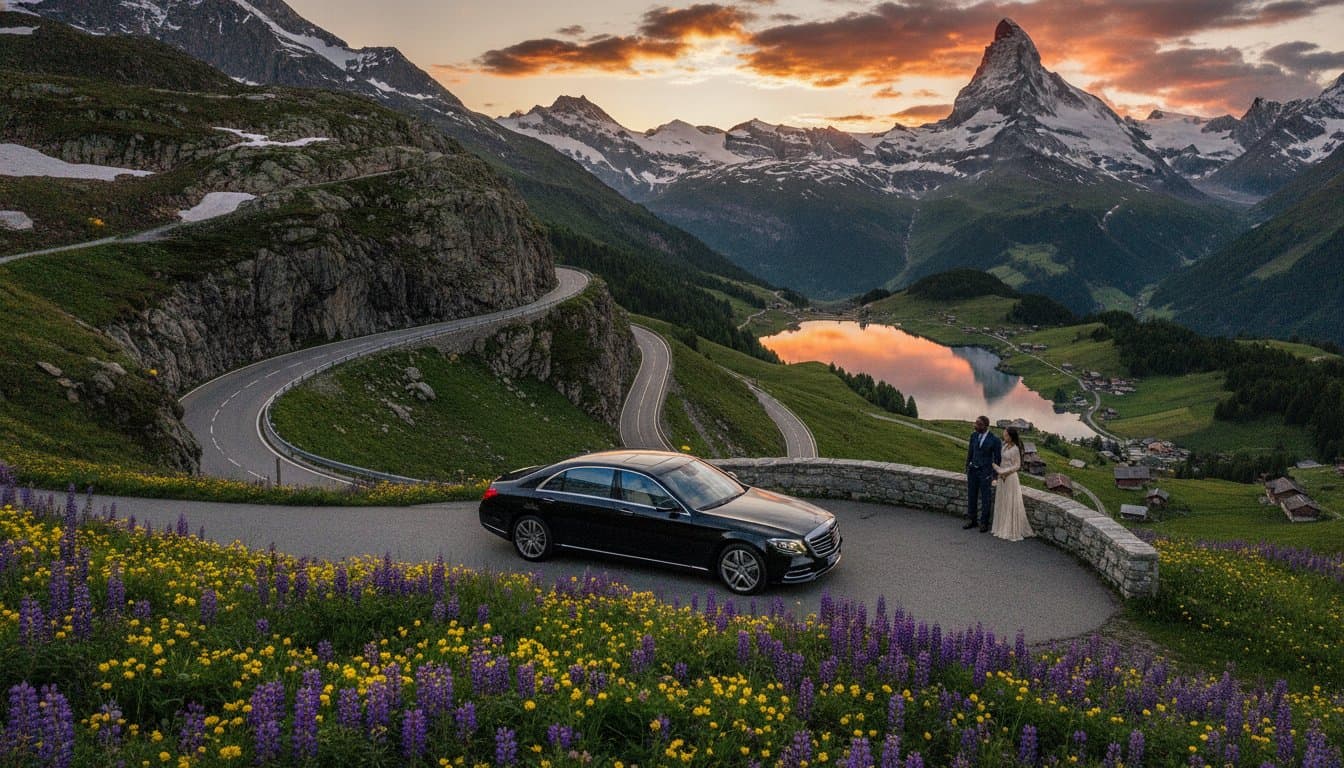
Zermatt operates by its own rules. The village is car-free by law, a decision that has preserved its soul entirely. Arriving by private electric taxi transfer into the village, with the Matterhorn framed at the end of every cobbled street, is an arrival that doesn't lose its power no matter how many photographs you've seen beforehand. A private guide knows exactly which ridge path to take at which hour to watch the peak turn rose-gold at dusk. Tour buses don't go there. They can't.
Lakeside Elegance and Architectural Gems
Lake Lucerne moves differently from the Alps. The pace is quieter, the light softer, the 14th-century Kapellbrücke reflected in still water that looks almost too perfect to be real. Chillon Castle, hugging the eastern shore of Lake Geneva, is Switzerland's most visited historic monument, and for good reason: its dungeons, towers, and frescoed halls tell eight centuries of Alpine political drama in stone and shadow. Arriving privately, before the midday crowds reshape the atmosphere, transforms the experience entirely.
Selecting which landmarks to prioritise is itself an art. Planning a trip to Switzerland in 2026 means thinking carefully about sequencing, pairing the grand UNESCO set-pieces with the smaller, uncrowded vantage points that only a local connoisseur knows to include.
Those hidden viewpoints, a shepherd's track above Grindelwald, a vine-terrace lookout in Lavaux that no signpost advertises, are the moments that separate a legendary journey from a standard itinerary. If you're ready to build yours around both, explore a bespoke private tour designed around exactly what moves you.
The Logistics of Luxury: Why a Private Chauffeur-Guide Outshines the Rail
Switzerland's rail network is genuinely impressive. Nobody disputes that. But there's a quiet fiction that gets sold alongside every Swiss Travel Pass: the idea that seamless connectivity means effortless travel. It doesn't. What it actually means is a precisely scheduled sequence of platform changes, luggage transfers, connection windows measured in minutes, and the creeping anxiety of watching a departure board in a language you don't fully read. The trains arrive on time. The experience of managing them rarely feels as elegant as the brochure suggests.
On a private multi-day grand tour of Switzerland, that entire layer of friction simply disappears. Your chauffeur-guide collects you from your hotel entrance, loads every bag without a second thought, and delivers you directly to each sight, pass, or village on your itinerary. No station navigation. No platform sprints. No last-mile taxi scramble from a rural halt to a viewpoint that's actually three kilometres further up a mountain road. Private touring saves an average of three hours of daily logistics compared to managing rail connections independently, and those hours compound beautifully across a multi-day journey.
Private Vehicle vs. Public Transport: A Direct Comparison
The differences aren't subtle once you examine them side by side:
- Flexibility: A fixed timetable can't account for a morning when the Bernese Oberland is draped in low cloud and Ticino is blazing with September light. A private vehicle can. Rerouting, extending a stop, or simply pulling over on an unmarked Alpine road because the view demands it: these are decisions made in the moment, not weeks in advance.
- Comfort: A climate-controlled luxury vehicle travelling through the Furka Pass bears almost no resemblance to a crowded seasonal train carriage in peak summer, where luggage competes for floor space and the windows fog with body heat.
- Privacy: Families reconnect. Couples talk properly. Business travellers decompress. That quality of intimate, uninterrupted time is genuinely impossible to replicate in a public cabin, and it's consistently what guests describe as one of the journey's unexpected gifts.
The Value of a Local Connoisseur
A GPS knows roads. A professional driver-guide knows people, places, and the precise Tuesday in October when a particular Graubünden valley turns amber and gold and entirely deserted. That distinction matters more than any navigation technology.
Multilingual expertise removes the invisible wall that even confident travellers hit in Romansh-speaking villages or tucked-away Ticino trattorias where the menu exists only in dialect. Your guide doesn't just translate words; they translate culture, context, and the unspoken etiquette that turns a transaction into a genuine encounter with Swiss life.
For those beginning or ending the circuit in the city, understanding the full scope of luxury chauffeur Zurich services illustrates exactly how seamlessly private transport bridges the gap between urban sophistication and mountain grandeur, without a single platform change required.

Master Your Itinerary: Seasonal Timing and Optimal Pacing for 2026
Switzerland doesn't have a bad season. It has four extraordinary ones, each revealing a completely different country. The real question isn't whether to go in summer or autumn. It's which version of Switzerland speaks to you, and how to structure your days so the journey breathes rather than sprints.
Summer (June to August) delivers the Grand Tour in its most theatrical form. High-altitude passes that stay snowbound well into May open fully, wildflower meadows above Grindelwald blaze with colour, and the long Alpine evenings stretch past nine o'clock, gifting you hours of golden light that photographers chase for years. Accessibility is at its peak. Every mountain road, every cable car, every remote valley track is open and waiting.
Autumn (September to October) is the connoisseur's season. The Lavaux vineyards enter harvest, the crowds thin dramatically, and the Bernese Alps acquire a crystalline sharpness that summer's warmth softens. Ticino's chestnut forests turn amber and copper. The air smells of woodsmoke and ripe fruit. For those who find summer's popularity a little relentless, September in Switzerland feels like a private reward.
Winter transforms the circuit into something almost mythological. Snow-dusted medieval facades in Stein am Rhein, frozen waterfalls on the Furka approach, the Matterhorn rising above a silent, white Zermatt. Not every high pass is driveable in January, but a knowledgeable private guide plans around those constraints rather than being defeated by them, routing through lower valley roads that reveal a quieter, more intimate Switzerland than summer ever shows.
For the multi-day grand tour of switzerland, the sweet spot is eight to twelve days. Fewer than eight and you're rushing; the psychological shift into genuine Swiss pace, that unhurried, present-tense rhythm, simply doesn't have time to settle. Beyond twelve days, most travellers find the circuit naturally completes itself and begins to repeat its themes.
Avoiding Tour Fatigue
The single most common mistake on extended touring itineraries is scheduling a different location every night. Slow travel works differently. Building in two-night stays in anchor regions, the Bernese Oberland, Ticino, Graubünden, allows genuine immersion rather than a sequence of arrivals and departures. A leisurely lakeside lunch in Lugano or an unscheduled afternoon in a Lavaux wine cellar isn't wasted time. It's the point. For multi-generational families, those unhurried days give younger and older travellers alike the space to absorb rather than endure.
2026 Seasonal Highlights
Switzerland's 2026 cultural calendar includes regional festivals across all four linguistic areas, from Romansh heritage events in Graubünden to summer lakeside concerts along Lac Léman. Alpine weather remains gloriously unpredictable regardless of season, and that's precisely where private touring earns its keep. A flexible itinerary can pivot west when the Valais clouds, or extend a mountain morning when conditions are perfect, without a single timetable to renegotiate. Pack in layers: even a July day in Switzerland moves from shirtsleeves at noon to a fleece by evening at altitude.
Ready to build an itinerary calibrated to exactly the season and pace that suits you? Plan your bespoke private grand tour with Swiss Epic Tours and let every day move at the rhythm Switzerland deserves.
Crafting Your Legendary Escape with Swiss Epic Tours
Swiss Epic Tours exists at the intersection of two things that rarely coexist in travel: refined excitement and total reliability. The philosophy is straightforward, but its execution is anything but. Every multi-day grand tour of Switzerland that leaves under the Swiss Epic Tours name is built from scratch around the people taking it, not around a fixed template borrowed from last season's most popular itinerary.
Bespoke planning begins with a genuine conversation. What moves you? Glaciers and high passes, or vineyard terraces and fromagerie cellars? A family with three generations travelling together needs different pacing than a couple celebrating a milestone anniversary. A solo traveller with a passion for Romansh culture requires a completely different lens than a group of friends chasing Alpine photography. Swiss Epic Tours maps every detail of your preferences onto the 1,600-kilometre canvas before a single kilometre is driven.
The fleet reflects that same commitment to quality over quantity. Modern luxury vehicles, climate-controlled and configured for Alpine comfort, carry you through hairpin passes and lakeside boulevards without a single concession to the ordinary. There's no luggage wrestling, no cramped seating, no compromise.
The Chauffeur-Guide: Your Personal Storyteller
A professional Swiss Epic Tours chauffeur-guide brings two things to every journey: logistical mastery and genuine passion for the landscapes you're moving through. They know which mountain road opens quietly in early June before the summer crowds arrive, and which Ticino trattoria deserves an unscheduled hour on a Tuesday afternoon. Multilingual and deeply knowledgeable, they don't simply drive you between coordinates. They build a living bridge between you and the authentic Switzerland that exists just beyond the tourist surface. That peace of mind, knowing every detail is managed by someone who genuinely cares about your experience, is something no booking platform can replicate.
Start Your Journey Today
Coordination is seamless from the first contact. Whether your journey begins with a Geneva Airport Transfer or a Zurich city collection, Swiss Epic Tours handles every connection across the full arc of a multi-day grand tour of switzerland, from arrival to final departure, without a single logistical gap left to chance.
The process of building your itinerary is as unhurried as the journey itself. You share your vision. Swiss Epic Tours shapes it into something legendary. Dates, regions, pacing, and personal priorities all inform a final itinerary that belongs entirely to you.
This isn't volume tourism dressed up in luxury language. It's the opposite. Contact Swiss Epic Tours to begin designing your bespoke multi-day adventure, and discover what Switzerland looks like when it's experienced entirely on your own terms.
Your Switzerland Awaits: Begin the Journey That Belongs to You
Switzerland doesn't reward those who rush it. A multi-day grand tour of Switzerland is, at its core, a decision to travel differently: to let the country's four linguistic regions, legendary Alpine passes, and hidden valley moments unfold at a pace that actually lets them land.
Three things make that possible with Swiss Epic Tours. Professional multilingual guides who know the landscape as intimately as the people within it. A fleet of modern luxury vehicles that turns every kilometre into a comfortable, private experience. And tailor-made itinerary planning that starts with your priorities, not a generic template borrowed from last year's most popular route.
The difference between a Switzerland you vaguely remember and one that stays with you permanently isn't the destination. It's the way you move through it.
2026 is the year to stop planning and start going. Design your bespoke multi-day Swiss tour today and let Swiss Epic Tours build a journey that's entirely, legendarily yours.
Frequently Asked Questions
How many days do I need for a full Grand Tour of Switzerland?
The sweet spot for a complete multi-day grand tour of Switzerland is eight to twelve days. Eight days gives you enough time to move through the circuit's core regions without the blur of a rushed itinerary, while ten to twelve days allows for two-night stays in anchor regions like the Bernese Oberland, Ticino, and Graubünden. Those extra nights are where genuine immersion happens, not just sightseeing.
Shorter trips of five or six days are possible if you focus on a specific arc of the route rather than the full 1,600-kilometre circuit. Your Swiss Epic Tours guide can shape a condensed itinerary that still delivers depth rather than a highlights reel.
Is a private multi-day tour better than the Swiss Travel Pass?
They solve different problems. The Swiss Travel Pass unlocks public transport; a private tour unlocks Switzerland itself. Rail connections require fixed timetables, platform navigation, luggage management between carriages, and last-mile transfers that rarely drop you exactly where you want to be. A private tour eliminates every one of those friction points and adds something a rail pass can never offer: a knowledgeable local connoisseur who knows which unmarked road leads to the view no timetable reaches.
For travellers prioritising flexibility, comfort, and genuine cultural access across multiple regions, private touring consistently delivers an experience that's qualitatively different from even the best-managed rail journey.
Can the itinerary be customised for specific interests like photography or hiking?
Completely. Bespoke itinerary planning is the foundation of every Swiss Epic Tours journey, not an optional add-on. A photography-focused tour can be timed around the precise morning light on the Aletsch Glacier or the rose-gold dusk on the Matterhorn's north face. A hiking-centred itinerary can incorporate trail access points in Grindelwald or the Lavaux vineyards that standard routes never pause for.
Your interests, whether that's Romansh heritage, Alpine gastronomy, architectural history, or off-trail walking, shape the route from the first conversation. Nothing is borrowed from a generic template.
What is included in the flat-rate fee for a private guided tour?
Swiss Epic Tours builds its pricing around transparency. The tour fee covers your professional multilingual chauffeur-guide, the luxury vehicle, and seamless coordination across the full arc of your itinerary, from collection point to final drop-off. Luggage handling is included throughout; there's no moment where you're left managing bags between transfers.
Entrance fees to specific attractions, cable car tickets, and accommodation are typically arranged separately and confirmed during the itinerary planning process. Swiss Epic Tours recommends clarifying the precise inclusions for your specific itinerary during your initial consultation, so every detail is agreed before departure.
Is Switzerland safe for private travel in 2026?
Switzerland consistently ranks among the safest countries in the world for travellers, and 2026 is no exception. Infrastructure is meticulously maintained, road conditions across Alpine passes are actively monitored, and emergency services operate to an exceptionally high standard. Travelling with a professional local guide adds a further layer of practical safety: your chauffeur knows current road conditions, seasonal closures, and weather patterns intimately.
Standard travel precautions apply as they would anywhere in Europe: comprehensive travel insurance, copies of important documents, and awareness of altitude considerations at high-elevation sites like Jungfraujoch.
Do your guides speak English and other languages?
Yes. Swiss Epic Tours chauffeur-guides are multilingual professionals. English is covered as standard, and fluency in additional languages is available depending on your group's needs. This matters more than it might initially seem: navigating a Romansh-speaking village in Graubünden or ordering from a dialect-only menu in a Ticino trattoria requires more than basic translation. Your guide bridges cultural context, not just vocabulary.
Language requirements are confirmed during the itinerary planning stage, ensuring the right guide is matched to your group before the journey begins.
How do we handle luggage during a multi-day tour?
Luggage management is handled entirely by your chauffeur-guide. Every bag is loaded and unloaded at each stop; you never carry, drag, or worry about your luggage between hotels, viewpoints, or regional transfers. For multi-day journeys with several overnight locations, your guide coordinates directly with each property to ensure smooth arrivals.
This is one of the most practically significant differences between private touring and rail travel. On a train, luggage is your responsibility across every platform change and connection. On a private tour, it simply disappears from your list of concerns from the moment you're collected.
What happens if the weather is bad during our scheduled mountain visit?
Alpine weather is genuinely unpredictable, and a knowledgeable private guide treats that as a feature of the journey rather than a problem to apologise for. If cloud closes in over Jungfraujoch on a planned morning, your itinerary can pivot: perhaps south toward Ticino's sunnier microclimate, or west to a lakeside destination that rewards overcast light beautifully. That real-time flexibility is something no fixed timetable can replicate.
Swiss Epic Tours builds breathing room into every multi-day itinerary precisely for this reason. The goal is never to force a schedule against the mountain. It's to move with Switzerland's rhythms and find the extraordinary wherever conditions allow.