
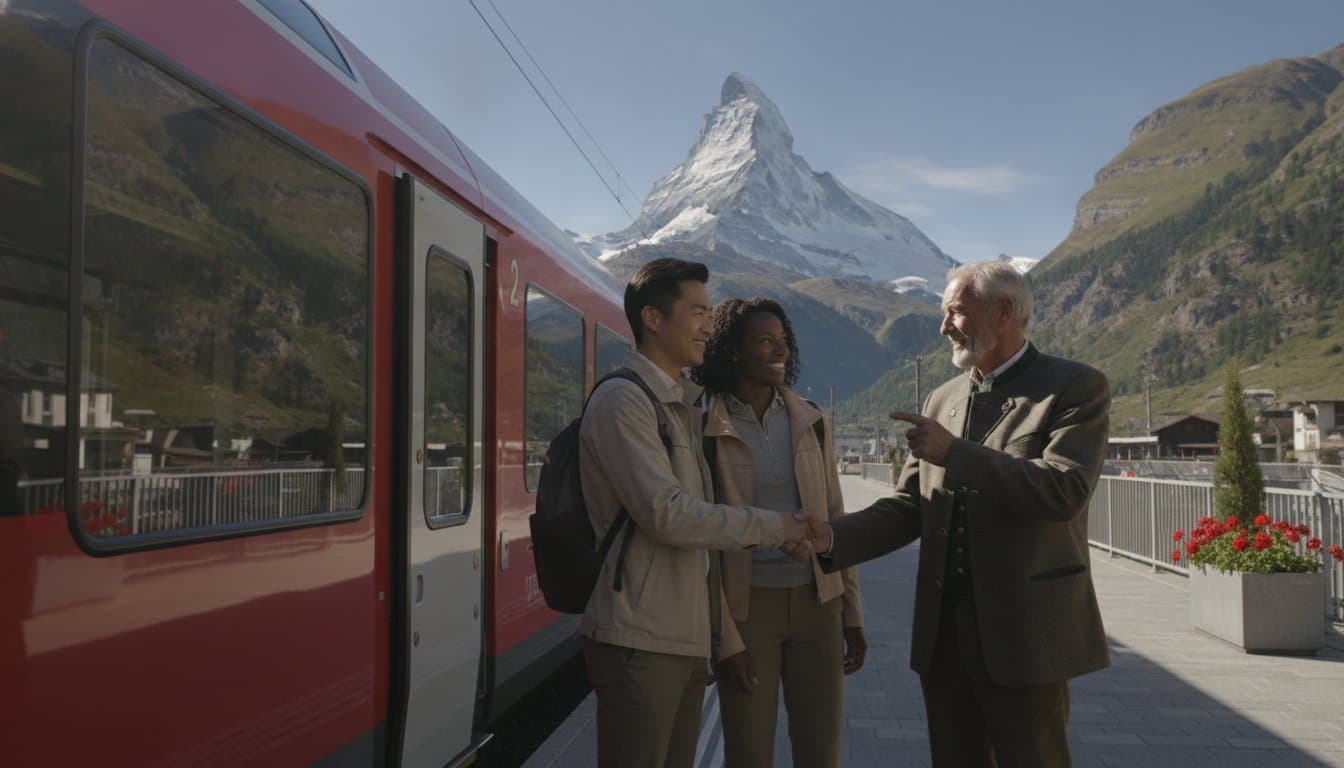
What if the secret to uncovering the soul of the Swiss Alps wasn't found in a map, but in the quiet, rhythmic pause between a shared artisanal cheese plate and a crisp mountain greeting? You likely feel the weight of expectation when visiting a land of such legendary precision, perhaps fearing the label of the "loud tourist" or feeling a flicker of anxiety over a misplaced tip. Mastering swiss travel etiquette for tourists is your key to transforming a standard holiday into a seamless, respectful, and authentic cultural immersion. This mastery ensures you move through our shimmering landscapes with the confidence of a true connoisseur.
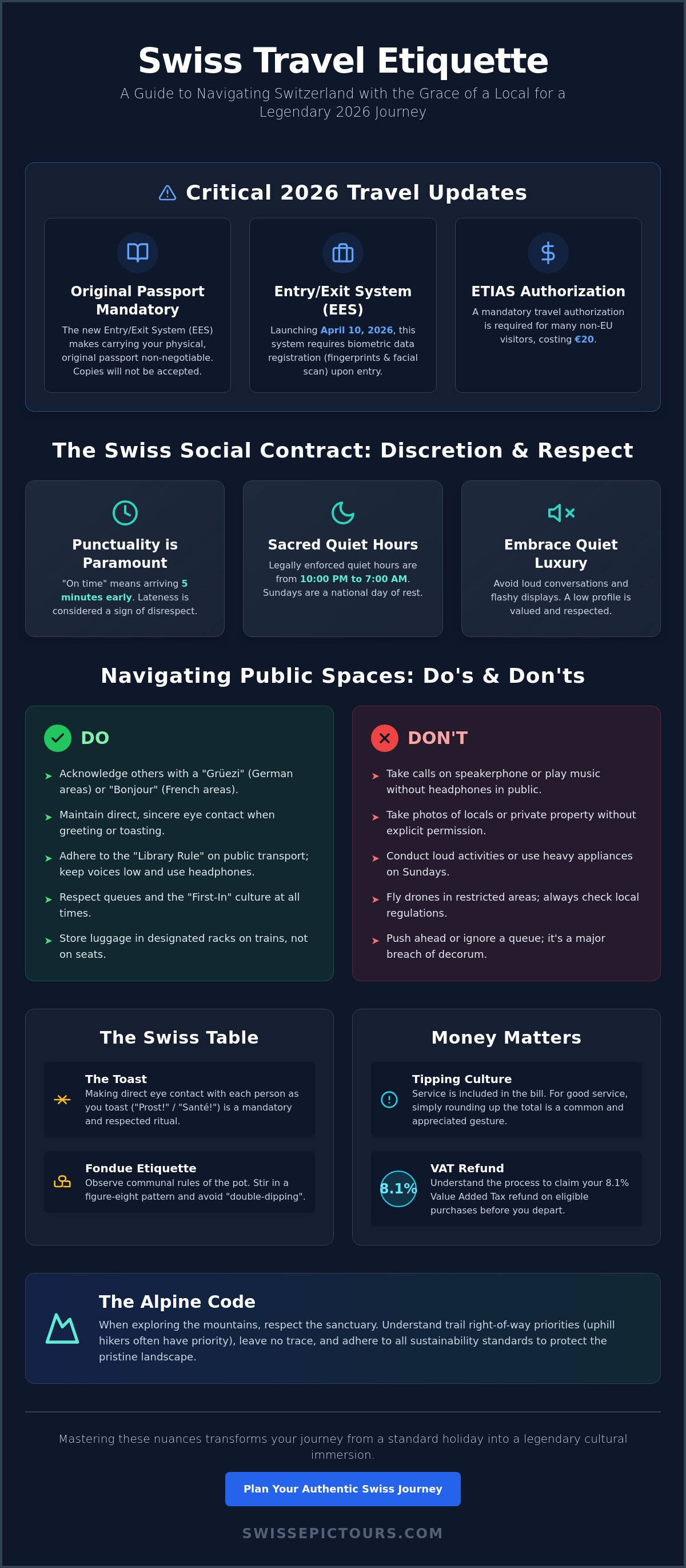
In this guide, we'll navigate the unspoken rules of Swiss society that define the 2026 travel experience. You'll learn why the new Entry/Exit System (EES) starting April 10, 2026, makes carrying your original passport more vital than ever, alongside the mandatory €20 ETIAS authorization. From navigating the 8.1% VAT refund process to respecting the sacred quiet hours after 10:00 PM, we provide the meticulous details for a legendary, friction-less journey. We'll reveal how a simple round-up of a bill can gain the respect of local hospitality staff, ensuring your time in our crystalline valleys remains effortless and extraordinary.
- Embrace the subtle art of "Grüezi" culture to blend seamlessly into local life and be welcomed as an honored guest.
- Master swiss travel etiquette for tourists by observing the "Library Rule" on public transit and keeping digital devices discreet in historic spaces.
- Learn the essential rituals of the Swiss table, including the mandatory eye-contact rule during a toast and the communal etiquette of the fondue pot.
- Understand traditional right-of-way priorities on alpine trails and the latest 2026 sustainability standards for high-altitude exploration.
- Discover how cultural fluency transforms your journey into a legendary experience that connects you deeply to the authentic essence of the landscape.
The Philosophy of Swiss Discretion: Understanding the Social Contract
In the shadow of the crystalline Eiger or along the polished promenades of Zurich, a legendary silent agreement governs every interaction. This is the Swiss social contract, a philosophy built on profound discretion and mutual respect. For those seeking the perfect journey, understanding swiss travel etiquette for tourists begins with recognizing that "quiet luxury" isn't just a fashion trend; it's a way of life. The Swiss value a low profile. Drawing unnecessary attention to oneself, whether through loud conversation or flashy displays, is seen as a breach of this collective harmony. By embracing this understated elegance, you transition from a mere visitor to a respected guest. Mastering swiss travel etiquette for tourists allows you to navigate these nuances with effortless grace.
The Art of the Swiss Greeting
The "Grüezi" culture is a non-negotiable ritual that anchors Swiss life. Whether you're stepping into a boutique in Lucerne or embarking on Swiss Alps private tours, acknowledging those around you is essential. While European etiquette norms vary by border, the Swiss approach is uniquely multi-layered. In German-speaking regions, a crisp "Grüezi" is standard; in the Romandie, a warm "Bonjour" suffices. Eye contact is the foundation of trust here. It should be direct and sincere. Among friends, the ritual of the three-cheek kiss is common, starting with the right cheek, though a firm, brief handshake remains the gold standard for formal introductions. This simple gesture signals your readiness to engage with the local culture on its own refined terms.
The Sanctity of Time and Space
Punctuality is the ultimate form of respect in Switzerland. To be "on time" for private day tours switzerland actually means arriving five minutes early. This precision reflects a deep appreciation for the schedules of others. Beyond the clock, the sanctity of space is equally vital. Switzerland observes legally enforced quiet hours from 10:00 PM to 7:00 AM, and Sundays are treated as a national day of rest. In 2026, these traditions remain robust; loud activities or even using heavy appliances on a Sunday can lead to polite but firm reminders from neighbors. In 2026, digital privacy has also become a cornerstone of Swiss discretion. Taking photos of locals without permission or conducting loud video calls in public spaces is increasingly frowned upon as the culture leans further into personal boundaries. Respecting these boundaries in crowded urban centers or serene mountain villages ensures your presence is harmonious rather than disruptive.
Public Conduct: Navigating the Swiss Landscape with Grace
The Swiss public landscape is a masterpiece of order and tranquility. When you step into a historic quarter or board a sleek, panoramic train, you'll immediately notice a distinct auditory profile. This is the "Library Rule" in action. Locals instinctively keep their voices low to preserve the collective peace of the environment. Taking a call on speakerphone or playing music without headphones is a major social faux pas; it's considered an intrusive breach of the personal space of others. Mastering swiss travel etiquette for tourists means mirroring this quietude. It's about moving through the world with a light, respectful touch that honors the serenity of your surroundings.
In 2026, the digital footprint of travel is more scrutinized than ever. While the emerald peaks and cobblestone streets are breathtaking, always respect private property and the privacy of residents. Drones are strictly regulated in many scenic areas to protect both the local wildlife and the silence of the mountains. According to Swiss customs and etiquette, seeking permission before photographing individuals is not just polite; it's a fundamental expectation. This orderly nature extends to queueing. The "First-In" culture is respected at every ticket window and cable car station. Pushing ahead or ignoring a queue is seen as a significant lapse in decorum.
Public Transport and Chauffeur Etiquette
Public transport is the rhythmic lifeline of the nation. On the SBB, luggage belongs in designated racks or under seats, never occupying a space meant for a passenger. If you wish to sit in an empty spot next to someone, a quick, polite inquiry is mandatory. If you've arranged for a luxury chauffeur, the dynamic shifts to one of refined ease. Your driver is a professional connoisseur who values your privacy. Maintain a balance of professional distance and warm rapport. Remember the golden rule of the escalator: stand on the right, walk on the left. Blocking the flow is viewed as a disruption to the legendary Swiss efficiency.
Urban Decorum and Shopping
Entering a Swiss boutique is a personal interaction rather than a transactional one. Acknowledge the shopkeeper immediately and offer a polite farewell when leaving, even if you didn't make a purchase. When browsing artisanal products, it's customary to ask for assistance rather than rummaging through displays yourself. Whether you're paying with Swiss Francs or a digital wallet, efficiency is prized. A Zurich City Tour offers the perfect opportunity to practice these urban graces under the gentle guidance of a local expert, ensuring you feel like an honored guest in every shop you visit.
The Swiss Table: Dining Etiquette and Gastronomic Rituals
To dine in Switzerland is to participate in a storied tradition of precision and shared joy. Whether you're seated in a sun-drenched bistro during a Bern & Gruyères Private Tour or a Michelin-starred sanctuary in Zurich, the table is sacred. One of the most critical elements of swiss travel etiquette for tourists is the ritual of the first toast. When you raise your glass for a "Prost" or "Santé", you must make direct eye contact with every person as your glasses meet. It's a gesture of sincerity and connection. Skipping this eye contact is often seen as a sign of distrust. It's a small but powerful detail that marks you as a sophisticated traveler.
Respecting the chef's vision is another cornerstone of the Swiss gastronomic experience. Asking for major modifications to traditional dishes is often perceived as an insult to the culinary heritage of the region. The ingredients are selected with meticulous care, often sourced from local artisanal producers. Trust the menu. By accepting the dish as it was intended, you show a deep appreciation for the local culture. This sense of respect extends to your physical presence at the table. Sit tall, keep your hands visible, and never rest your elbows on the cloth. These refined habits signal your status as an honored guest who values the nuances of the local social contract.
Mastering the Communal Meal
Communal dining, particularly with fondue or raclette, is an exercise in collective grace. Double-dipping is strictly forbidden. Once your bread has touched your mouth, it must not return to the pot. Tradition dictates that if you lose your bread in the molten cheese, you owe the table a round of drinks. The pace of the meal is intentionally leisurely. Swiss culture prizes the conversation as much as the cuisine, so rushing through courses is viewed as unrefined. When pouring wine, it's polite to fill your companions' glasses before your own. Always wait for the host to take the first sip before you begin.
Tipping and Gratitude in 2026
Navigating the bill requires an understanding of "Service Compris". In 2026, the standard VAT rate is 8.1%, and service charges are typically included in the listed price. However, extra appreciation is always welcomed for exceptional service. According to Swiss customs and etiquette for travelers, rounding up to the nearest five or ten francs is the standard practice in casual settings. In fine dining, a 5% to 10% tip is a generous mark of a connoisseur. If you've spent several days with a private guide, showing gratitude is more personal. For a half-day excursion in 2026, a tip between CHF 20 and CHF 50 is considered appropriate. This gesture acknowledges the storytelling and logistical expertise that transformed your trip into a legendary experience.
The Alpine Code: Respecting the Sanctuary of the Mountains
The Swiss Alps are a cathedral of stone and ice. When you ascend into these crystalline heights, you enter a space where the air is thinner and the social expectations are as crisp as the morning frost. Mastering swiss travel etiquette for tourists in the high country is about recognizing the mountains as a shared sanctuary. On steep, narrow paths, the ritual of right-of-way is paramount. Uphill hikers always have priority. It's a matter of physics and respect; the person climbing needs to maintain their momentum and rhythm. Step aside gracefully to allow them their ascent. This simple gesture of courtesy is the mark of a true mountain connoisseur.
In 2026, Switzerland’s sustainability standards for high-altitude tourism have reached a legendary level of rigor. The "Leave No Trace" mandate is a non-negotiable commitment to purity. Every wrapper, fruit peel, or stray thread must return to the valley with you. This dedication preserves the awe-inspiring beauty of our peaks for generations. Even in the shared space of a cable car, the "Library Rule" mentioned earlier applies. Passengers prize a peaceful ascent, allowing the mechanical hum and the panoramic views to take center stage. If you wish to explore these heights with a local expert who understands every nuance of the trail, our Swiss Alps private tours provide an exclusive bridge to the authentic mountain experience.
Hiking Etiquette and Safety
The bright yellow "Wanderweg" signs are sacred guides. Straying off-trail is not only a safety risk but is viewed as a deep sign of disrespect for the fragile alpine ecosystem and the farmers who own the land. When you encounter a fellow hiker, a warm "Grüezi" or "Bonjour" is the universal greeting of the peaks. If your journey includes a stay in a mountain hut, remember that these are communal havens. Keep noise to a minimum, especially after 9:00 PM, and ensure your gear is stored neatly. Cleanliness in these remote outposts is a collective responsibility.
Sustainable Alpine Tourism
Switzerland’s public water fountains are legendary, offering pristine, mineral-rich water that is often better than bottled alternatives. Using these fountains to refill your glass or stainless-steel bottle is the refined way to reduce your plastic footprint. While the wildlife is captivating, maintaining a respectful distance is mandatory. Feeding marmots or ibex is strictly prohibited under 2026 environmental regulations, as it disrupts their natural diet and behavior. When passing through alpine pastures, always close gates behind you to keep livestock secure. Supporting the local mountain economy by purchasing artisanal cheese or honey directly from a farmer's "Honesty Box" is a beautiful way to connect with the regional identity.
Elevating Your Journey: Why Cultural Fluency Defines Luxury Travel
True luxury in Switzerland transcends the shimmering surface of its glacial lakes or the opulent suites of its grand hotels. It's found in the intellectual ease of belonging. When you move through our crystalline landscapes with a deep understanding of local customs, you transform from a mere spectator into an honored guest. By internalizing swiss travel etiquette for tourists, you shed the skin of a visitor and become a participant in a storied cultural narrative. This fluency allows for a journey that is not only visually spectacular but emotionally resonant. It's the difference between seeing a place and truly knowing it.
At Swiss Epic Tours, we act as the essential bridge between the curious traveler and the authentic soul of the Alps. We believe that the ultimate luxury in 2026 is "slow travel"—the permission to linger, to breathe, and to respect the natural rhythm of the land. Our bespoke itineraries are designed for the connoisseur who values quality over quantity. We prioritize exclusivity and convenience, ensuring that every logistical detail is handled with the same precision as a handcrafted Swiss timepiece. This allows you to focus entirely on the sensory awe of your surroundings.
The Guide as Your Cultural Ambassador
A private guide is much more than a navigator; they are your cultural ambassador. They possess the local relationships required to unlock "hidden gems" that remain invisible to the standard itinerary. Whether it's a private tasting with an artisanal cheesemaker or a secluded path with the best vantage point of the Matterhorn, your guide navigates the social nuances on your behalf. They ensure your presence is always perceived as respectful and informed. This level of personalization transforms a holiday into a legendary experience, tailored to align perfectly with your individual passions and the seasonal traditions of the region.
Planning Your Respectful Adventure
Integrating cultural fluency into your Switzerland travel planning is the first step toward a graceful adventure. Choose experiences that support sustainable heritage and respect the sanctuary of the mountains. To ensure your 2026 journey is as seamless as possible, keep this final checklist of sophisticated travel in mind:
- Documentation: Ensure your ETIAS authorization is secured and carry your original passport to comply with the 2026 Entry/Exit System (EES).
- The Five-Minute Rule: Always arrive slightly early for appointments to show respect for your host's time.
- Auditory Profile: Maintain a low voice in public spaces and historic quarters to honor the local "Library Rule."
- Gastronomic Respect: Make direct eye contact during every toast and avoid requesting major modifications to traditional dishes.
- Quiet Hours: Observe the national silence from 10:00 PM to 7:00 AM and throughout the day on Sundays.
Traveling the "Swiss Epic" way means moving with grace, curiosity, and a deep appreciation for the purity of the landscape. It's a commitment to excellence that ensures your journey is as smooth as it is inspiring.
Embarking on Your Legendary Swiss Journey
The art of traveling well in the Swiss Confederation lies in the subtle dance of respect and awareness. By mastering swiss travel etiquette for tourists, you ensure that every interaction, from a shared fondue pot in Gruyères to a quiet ascent in a Zermatt cable car, is marked by effortless grace. You now understand that punctuality is our deepest form of respect and that the sanctuary of the mountains requires a dedicated "Leave No Trace" commitment. These aren't just social rules. They are the keys to unlocking a deeper, more authentic connection with our storied landscapes and artisanal traditions.
Our professional, multilingual local connoisseurs are ready to redefine your understanding of luxury through profound cultural expertise and personal storytelling. We handle the seamless logistics and bespoke itinerary planning that allow you to focus entirely on the sensory awe of the Alps. Begin your sophisticated Swiss journey with a private tour today. We invite you to step beyond the commonplace and experience the legendary purity of Switzerland as an honored guest. Your extraordinary adventure is ready to unfold.
Frequently Asked Questions
Do I really need to tip in Switzerland in 2026?
Tipping is not mandatory because service charges are included in the price of your meal or stay. However, rounding up the bill or adding 5% to 10% for exceptional service is a common way to show appreciation in premium establishments. For those following swiss travel etiquette for tourists, providing a cash tip of CHF 20 to CHF 50 for a half-day private excursion is a gracious gesture that acknowledges your guide's storytelling and logistical expertise.
Is it considered rude to speak English in Switzerland?
English is widely and expertly spoken across the country, especially in major cities and tourist hubs. You won't face any rudeness for using it; however, beginning an interaction with a local greeting like "Grüezi" or "Bonjour" is highly appreciated. This small effort signals your respect for the regional identity and the country's multilingual heritage, immediately establishing a warm and personal rapport with the local people you meet.
What should I wear to blend in as a tourist in Swiss cities?
To blend in seamlessly, adopt an aesthetic of "refined practicality" or "quiet luxury" that favors neutral tones and high-quality fabrics. Swiss urbanites typically dress neatly and conservatively; overly distressed clothing or very casual athletic wear can feel out of place in a boutique or fine-dining setting. Polished, comfortable footwear is essential for navigating historic cobblestone streets with the effortless elegance expected in our sophisticated city centers like Zurich or Geneva.
How strict are the "quiet hours" on Sundays and evenings?
Quiet hours are a legally protected pillar of Swiss life, spanning from 10:00 PM to 7:00 AM daily and throughout the entire day on Sundays. This social contract is taken very seriously; even minor disturbances like loud music or heavy household chores can lead to polite but firm interventions from neighbors. Adhering to these standards is a vital part of swiss travel etiquette for tourists, ensuring you honor the peaceful, legendary rhythm of the local community.
Can I drink the water from public fountains in Switzerland?
You may absolutely drink the water from the vast majority of public fountains. Switzerland is famous for its crystalline, potable fountain water that is often superior in quality to many bottled varieties. Unless you see a sign specifically stating "non-potable" or "Kein Trinkwasser," feel free to refill your bottle. It is a sustainable and sophisticated way to enjoy the purity of alpine springs while exploring our picturesque villages and vibrant cities.
What is the most important etiquette rule for Swiss trains?
The cardinal rule for Swiss trains is to preserve the tranquil environment by keeping noise to an absolute minimum. Avoid taking phone calls in regular carriages and never use speakers for music or videos; instead, use headphones at a low volume. Additionally, always ensure your luggage is stored in designated racks rather than on a seat. This practice ensures a seamless, respectful, and comfortable journey for every passenger sharing the cabin.
How do I address my private guide or driver?
Address your guide or driver with a blend of warmth and professional respect, typically using "Mr." or "Ms." followed by their surname until a first-name basis is invited. This mirrors the Swiss preference for professional discretion and polite distance. Your guide is a sophisticated connoisseur of the region, and treating them with this level of courtesy fosters a mutually respectful experience that elevates your journey from a standard tour to a personal connection.
Is it okay to bargain or haggle in Swiss shops?
Bargaining is not part of the Swiss retail culture and is generally considered unrefined. Whether you are in a high-end watch boutique or a local artisanal shop, the listed price is final and reflects the true value of the craftsmanship and materials. Haggling is only acceptable in very specific, informal settings like flea markets. In all other commercial interactions, it is best to accept the price as a reflection of the quality provided.