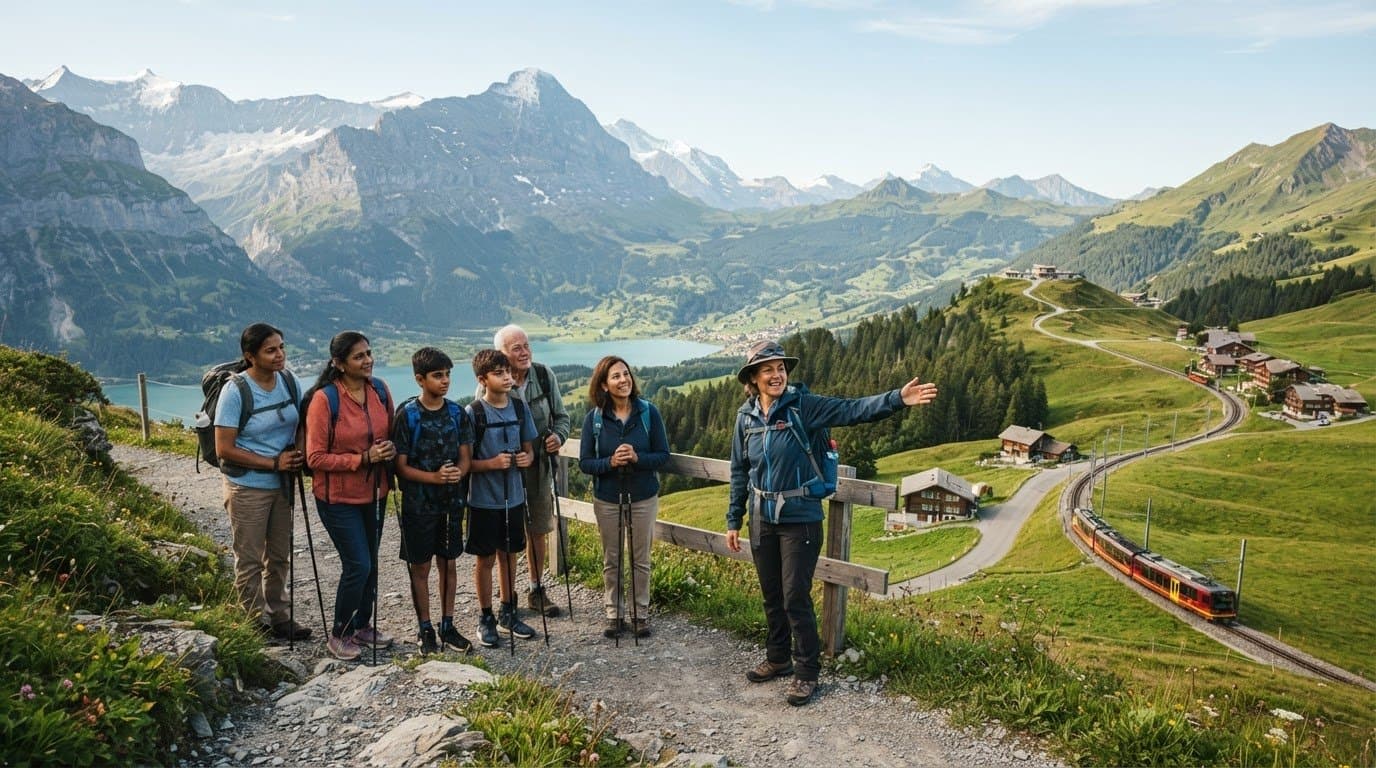
A guide can make the Swiss Alps feel less like a checklist of famous stops and more like a journey shaped around your family or group. For families and groups, hiring a guide is worth it when local insight, a comfortable pace, and simpler planning matter more than exploring entirely on your own. If you already know the trails and feel confident managing the day’s logistics, independent travel may suit you better.
Switzerland’s trains, mountain lifts, villages, and walking routes make independent travel appealing, but choosing the right combination takes planning, especially when everyone has different interests or energy levels. A knowledgeable local guide can help you discover quieter paths and characterful villages, tailor the itinerary to your group, and appreciate the landscapes around places such as Interlaken and Grindelwald. This article explains when a guide adds meaningful value, what families and groups should consider, and when independent travel may be enough. The aim is a day in the Alps that feels seamless, personal, and memorable.
Key Takeaways
- Choose a local guide when you want help matching alpine trails, villages, and viewpoints to your group’s interests and abilities.
- Independent train travel may be enough if you’re comfortable planning connections, reservations, and timings on your own.
- Use local insight to bring Swiss traditions, regional history, and food culture into the journey, not just the scenery.
- Shape the day around your group’s pace and priorities, with room to adapt plans when weather or closures affect the itinerary.
- Explore a private day tour or multi-day route when coordinated travel and a more personal Swiss Alps experience would make planning easier.
Finding hidden alpine trails, villages, farms and viewpoints
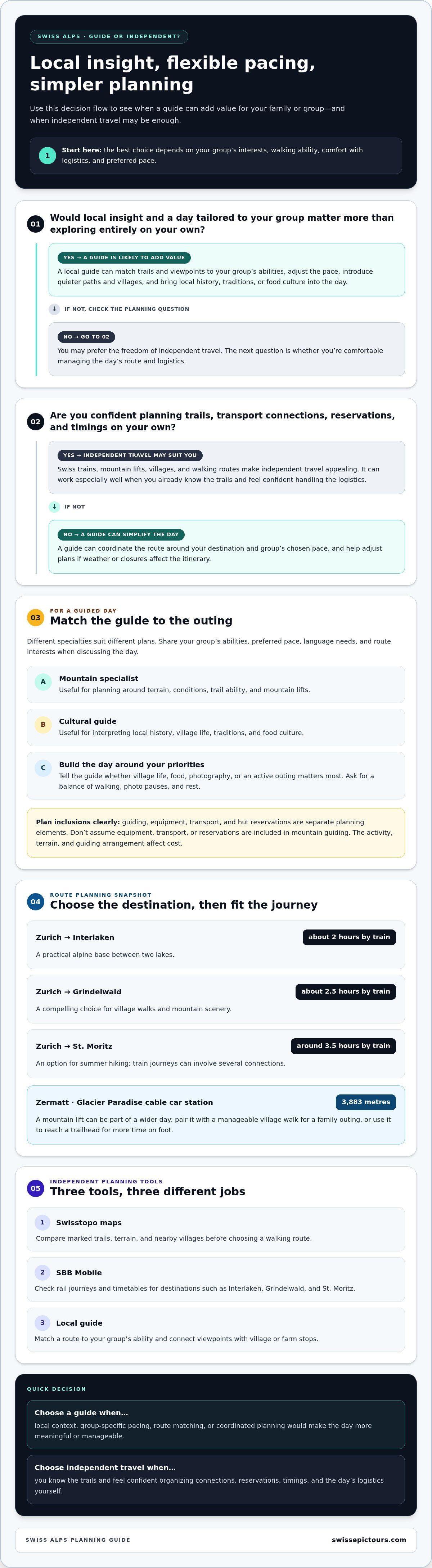
Grindelwald, Zermatt, and Interlaken can be especially rewarding with a guide when you want more than a famous viewpoint. A local guide can help match trails to your group’s abilities and introduce quieter paths, village details, and farm landscapes. Each destination offers a mix of mountain scenery and routes, from valley walks to demanding summit trails.
In Zermatt, the 5-Lakes Walk and Gorner Gorge offer very different ways to experience the same dramatic landscape. A guide can help you choose based on walking ability, weather, and the time available, then explain which viewpoints suit a relaxed family outing. They may also point out local farms and village paths that are easy to overlook when following only the busiest route. Ask for a plan that balances walking with pauses for photographs and rest.
Interlaken makes a practical alpine base between two lakes, about a 2-hour train ride from Zurich. From there, Grindelwald is a compelling choice for village walks and mountain scenery; it lies about 2.5 hours from Zurich by train. St. Moritz, around 3.5 hours from Zurich by train, offers summer hiking. These journeys can involve several connections, so map the train route before setting out. SBB Mobile is useful for checking rail journeys and timetables, while a guide can help coordinate the day around the group’s chosen destination.
Cable cars and mountain railways open access to high viewpoints, but they also shape the day’s route and pace. In Zermatt, the Glacier Paradise cable car station sits at 3,883 metres. A guide can help you place a mountain lift within a wider itinerary, rather than treating the summit as the entire outing. For a family day, combine a ride with a manageable village walk; for keen hikers, use it to reach a trailhead and spend longer on foot. Weather or closures may require adjusting the plan.
For maps and practical planning, these tools serve different purposes:
- Swisstopo maps: Compare marked trails, terrain, and nearby villages before choosing a walking route.
- SBB Mobile: Plan train journeys to Interlaken, Grindelwald, or St. Moritz.
- Local guide: Match a route to your group’s ability and connect viewpoints with village or farm stops.
Plan in a simple sequence: choose the destination, decide how much walking suits your group, then fit the railway or cable car around that plan. A guide adds the most value when you want to combine places such as Interlaken and Grindelwald without spending the day making route decisions. Independent travelers who know the trails and transport connections may prefer exploring at their own pace.
Is a Private Guide in Switzerland Worth It When the Trains Are So Easy?
The activity, terrain, and guiding arrangement affect the cost, so compare what the planned day includes before booking.
To find and book a certified mountain guide, use the Mountain Guide Association of the Alps as a starting point. It dates back to 1858. Look for a guide whose credentials and experience match your planned activity, then share your group’s abilities, preferred pace, language needs, and route interests before agreeing on the day.
Swiss trains make independent travel straightforward, but local conversations can add depth once you arrive. Switzerland has four official languages: German, French, Italian, and Romansh. In Zurich, German is the main local language; in Ticino, Italian shapes restaurant menus and everyday conversation. A guide can explain local context and help you approach residents politely, whether at a family-run inn or village market.
A guide can also tailor recommendations to your interests rather than follow a generic itinerary. Ask about a restaurant serving regional dishes, a locally run business, or a quieter place to pause for photographs. Choosing independent local businesses can keep more of your travel spending in the communities you visit. In Zermatt, a guide can help you choose a Matterhorn viewpoint that suits your walking plans and the light.
A guide’s experience matters because a city guide, hiking guide, and ski guide bring different expertise. Match the specialization to the day: a cultural guide can interpret local history, while a mountain specialist can plan around terrain and conditions. Before booking, explain whether your priority is village life, food, photography, or an active outing. That conversation helps shape useful recommendations.
Several simple tools can make local interactions easier:
- Google Translate: Translate a menu or prepare a polite question for a shopkeeper.
- Offline map app: Save a meeting point or route in case mobile coverage drops.
- Camera grid: Align the Matterhorn or a village street for a more balanced photograph.
For a Zurich day trip, a guide can add value through local insight and carefully chosen stops, not simply by replacing the train journey. If you’re comfortable arranging transport and basic interactions, independent travel may suit you. If language, local context, and tailored recommendations matter to your group, a guide can make each stop more meaningful.
How Do Local Guides Enhance Your Switzerland Travel Experience?
A mountain guide’s core work is choosing a route, leading the outing, and interpreting terrain and conditions. Equipment, transport, and hut reservations are separate planning elements, so don’t assume they’re included in mountain guiding.
In Lucerne, local history becomes vivid when you look beyond the lakeside views. Chapel Bridge dates to the 14th century, while the Musegg Wall preserves a stretch of 13th-century fortifications. A guide can connect those landmarks to the city’s changing role and explain details you might pass without noticing, from painted panels to the old defensive towers. The result is a stronger sense of place, not simply a list of dates.
Swiss culture is also reflected in everyday traditions. Ask about alphorn music, yodeling, seasonal customs, or the work behind regional cheese. A local guide can explain how geography and community shape these practices and help you approach them with respect. In Zermatt, the mountain setting offers a natural starting point for conversations about village life and how tourism intersects with local routines.
Food offers another way to understand a region. A guide can help you read a menu, identify familiar Swiss dishes such as rösti or fondue, and choose a restaurant that suits your group’s tastes. Ask what is produced locally and how a meal connects with the area’s culture. These details can make a meal feel less like a convenient stop and more like a meaningful part of the day.
Use these simple tools to explore cultural details at your own pace:
- Google Lens: Translate a museum label or menu when you want to understand a detail on the spot.
- Offline translation app: Prepare a polite question for a shopkeeper or restaurant staff member.
- Museum audio guide: Follow an exhibit’s story independently, then ask a local guide about its regional context.
For a richer experience, choose one cultural focus before the outing, such as architecture, food, or music. Then ask your guide to connect that interest with the places you visit. A family curious about Swiss traditions might favour a village stop and a local meal; a history enthusiast may prefer Lucerne’s old fortifications. Personal context makes the experience feel distinctive without turning it into an exclusive performance for visitors.
A guide’s value lies in interpretation as much as logistics: they help you understand why a building, custom, or dish matters locally. If your priority is simply reaching a viewpoint, independent travel may be enough. If you want the cultural story behind Switzerland’s alpine landscapes, guided conversation can make each stop more memorable.
Custom itineraries and tour pacing
A tailored itinerary gives your group room to enjoy Switzerland without racing between scenic stops. Start with one priority, such as a lakeside lunch in Lucerne or time for photographs around Lake Thun. Then set a comfortable pace, allowing for breaks, meals, and travel between activities. A guide can arrange the order around your preferences instead of treating every landmark as a must-see.
Time examples help make the plan realistic. A private scenic tour featuring the Swiss Alps, Lake Lucerne, and a summit restaurant is listed as six hours. A half-day Lucerne tour is listed as three hours and 30 minutes. These different formats show why the itinerary should begin with your available time and interests. For a slower day, choose fewer stops and allow longer at each one. For an active group, spend more time outdoors and keep transitions efficient.
Build flexibility into the route, especially when weather or closures could affect a mountain visit. Choose the main region, select a central experience, then add nearby stops that suit your group. For example, pair a Lucerne visit with a lakeside pause rather than adding distant destinations. If clouds obscure a planned viewpoint, a guide can adjust the day to include a town, museum, or scenic lower-altitude stop.
Families and groups with varied interests benefit from agreeing on the pace before setting out. Tell your guide whether children need frequent rests, anyone prefers gentle walks, and how much time the group wants for meals. A photography-focused group may linger at a viewpoint, while a history-minded group may favour more time in Lucerne’s old town. Clear priorities help keep the itinerary considered rather than crowded.
Use planning tools to support those decisions:
- SBB Mobile: Compare train connections and journey timing when planning a route across the country.
- Swisstopo maps: Review terrain and walking routes before choosing an outdoor segment.
- MeteoSwiss: Check the forecast when deciding whether a mountain viewpoint or town visit suits the day.
Keep an alternative in the itinerary, such as a lakeside walk instead of a high viewpoint. This gives the day shape without making every stop dependent on perfect conditions. A guide can coordinate the sequence and adapt the pace for a group that values convenience. Independent travelers may prefer setting their own schedule, particularly when they know the region and transport connections.
Families and groups traveling with a guide
A guide can shape an alpine day around different ages, interests, and walking abilities. For a family near Interlaken, that might mean balancing an easy village stroll with a mountain viewpoint instead of committing everyone to a demanding hike. For friends with mixed interests, it could mean making time for photographs, local food, and a relaxed break.
The clearest benefit is shared planning. Before the outing, agree on a few priorities: scenery, gentle walking, village life, or a particular landmark. Then tell the guide who is joining and what pace feels comfortable. A family with young children may value short walks and convenient pauses; keen walkers may prefer a longer trail. Clear expectations help everyone enjoy the day.
Families often ask, “Is it worth hiring a guide for the Swiss Alps?” Iconic destinations can work especially well for groups when someone coordinates the details. Jungfraujoch is home to Europe’s highest railway station, and a guided tour can put the journey and surrounding landscape in context. The right experience depends on your group’s interests and energy, not simply on fitting a famous name into the itinerary. Families who want a gentler day can prioritize views and breaks over a strenuous route.
For relatives traveling together, a guide can keep decisions from becoming the day’s main activity. One person may want to stop for photographs, while another prefers a lakeside pause or a local meal. Agreeing on a shared plan gives everyone a moment to enjoy while the guide coordinates the sequence. That balance matters on a beautiful day in the Alps.
Use these tools to make group planning more practical:
- Shared itinerary app: Keep meeting points, planned stops, and transport details in one place for everyone.
- Offline maps: Save the route and rendezvous point in case mobile coverage is limited.
- Group chat: Share the agreed pace, clothing notes, and any changes before departure.
Knowing when a guide is less necessary makes the choice clearer. If everyone is comfortable planning transport, choosing accessible routes, and adapting independently, a self-guided day may be a better fit. For a group with varied needs, deciding whether to hire a guide for the Swiss Alps means weighing coordinated plans against the freedom to set your own schedule. Small-group guided tours can suit travelers who want company without organizing every detail themselves.
For families and friends who want a coordinated outing, explore guided Swiss Alps tour options and consider which itinerary best matches your group’s pace and interests.
Swiss Epic Tours: Multi-day Grand Tour of Switzerland
Swiss Epic Tours offers the Multi-day Grand Tour of Switzerland for travelers who want a guided journey across the country instead of planning each leg independently. It suits families and groups looking for a coordinated, tailor-made experience shaped around their interests and pace.
For a shorter visit, consider a Zurich City Tour or a private day tour. If alpine scenery is the priority, Swiss Alps private tours offer a personal way to explore mountain landscapes with a guide. The right choice depends on how much time you have and whether you want to focus on one region or travel more widely.
To discuss a Swiss itinerary tailored to your group, contact Swiss Epic Tours or visit swissepictours.com.
Make Your Swiss Alps Journey Your Own
Whether hiring a guide for the Swiss Alps is worth it comes down to the experience you want to bring home. If your group would rather focus on the scenery and one another than coordinate every detail, guided travel can be a thoughtful choice. If you enjoy building your own route and adapting plans as you go, independent travel may suit you better.
Swiss Epic Tours offers Swiss Alps private tours for travelers seeking a personal mountain experience, alongside the Zurich City Tour and Multi-day Grand Tour of Switzerland. Choose the journey that fits your group’s interests, then consider how you want the days to feel: unhurried, culturally rich, scenic, or a blend of all three. That vision is a useful starting point for planning a memorable Swiss escape.
Contact Swiss Epic Tours to explore an itinerary for your group. Your next Swiss adventure can begin with a simple idea and grow into something extraordinary.
Frequently Asked Questions
Do local guides speak English?
Some local guides speak English, but language ability varies. Choose a guide who clearly communicates in English and can explain route plans, meeting points, and changes in terms your group understands. Before the outing, share key preferences in writing, such as a gentle pace or interest in local history. Switzerland has four official languages, so language needs can differ between regions and even between nearby communities.
When is a guide recommended or required for hiking in the Swiss Alps?
A guide is especially useful for unfamiliar, demanding, or exposed routes, where route choice and changing conditions can complicate the day. On a well-marked walk suited to your experience, independent hiking may be practical. Whether a guide is legally required depends on the specific activity and location; don’t assume every alpine hike follows the same rule. Match the route to your group’s ability first.
What are the risks of hiking or climbing in the Swiss Alps without a guide?
Without local route knowledge, hikers can misjudge trail difficulty, lose time choosing a route, or continue after conditions change. On challenging terrain, a navigation error can increase exposure and make returning harder. Off-piste ski terrain brings additional hazards: it may be unmarked and uncontrolled for avalanches, with cliffs, crevasses, and rocks. A guide can improve safety, but cannot guarantee it.
How do guided and self-guided Swiss Alps trips compare in cost, safety, and flexibility?
Self-guided travel lets you control the schedule and spending, with transport and mountain-access tickets shaping costs. A guided trip adds the cost of a guide, while its overall value depends on the route, group size, and what the arrangement includes. Independent plans offer freedom to linger or change direction; a guide brings local coordination and can adapt the itinerary to weather or closures. Neither option removes the need to respect conditions.
What qualifications should a Swiss mountain guide have?
Choose a guide with expertise suited to your planned activity, since a hiking outing and a technical climbing route call for different skills. Check that their qualification applies to the terrain and conditions you expect, and consider their experience leading groups with similar abilities. Before committing, share your route goals and fitness level so the guide can assess whether their specialization suits your outing.
How do weather, altitude, and trail difficulty affect the need for a guide in the Swiss Alps?
Weather can change visibility, trail conditions, and access to mountain lifts, while altitude and steep terrain can affect your group’s pace and comfort. A guide is more useful when your route leaves little room for error or conditions may change during the day. Compare the forecast with the trail’s demands, identify a lower-level alternative, and set a clear point for turning back if the plan no longer fits.