A dairy-free label doesn’t answer every allergy question. A dairy-free Swiss chocolate tasting experience can introduce you to rich cocoa aromas and a smooth, satisfying texture, but ingredients and handling practices matter just as much as the first bite.
It’s natural to want chocolate that feels indulgent without taking unnecessary risks. Dairy-free recipes may use cocoa butter or plant-based alternatives for creaminess, so flavor and texture can vary. For allergy-aware visitors, shared equipment and preparation areas also matter.
This guide explains what to expect from the taste and mouthfeel, which ingredient and cross-contact details to clarify, and how to approach a tasting when dairy allergy is a concern. You’ll learn what to look for, which questions matter, and when allergen information may not provide enough reassurance.
Key Takeaways
- Discover how dairy-free chocolate can deliver a creamy mouthfeel, and which ingredients may shape its flavor.
- Learn what to look for in ingredient and allergen information, including warnings about shared equipment or facilities.
- Understand why a vegan option or tasting label alone may not answer every dairy-allergy concern.
- See how a private tour can help you weave Swiss chocolate stops into a wider journey through the country.
Creamy texture and flavor
A dairy-free Swiss chocolate tasting experience can still offer a silky melt and layered cocoa notes. Texture depends partly on the recipe: cocoa butter melts smoothly, while finely ground cocoa gives chocolate its body. A piece that melts evenly may feel luxurious without containing milk. Taste slowly and notice whether the finish is fruity, nutty, roasted, or pleasantly bitter.
Plant-based ingredients can shape both mouthfeel and flavor. Oat-based recipes may bring a gentle cereal note, while coconut can add a distinct aroma. Dark chocolate often emphasizes roasted cocoa; a vegan milk-style bar may taste rounder and sweeter. Compare plain dark chocolate with a flavored sample, such as orange or hazelnut, to notice how additions change the cocoa’s finish.
There’s no universal tasting lineup. Depending on the selection, a host may offer dark bars, plant-based milk-style chocolate, or flavored pieces. Ask which samples are included and whether each recipe is dairy-free. “Vegan” describes a product without animal-derived ingredients, but it doesn’t explain how the chocolate was made or handled.
The cost depends on the tasting format, chocolate selection, and hosting included; it is provided after a quote request. A guided session with several samples may differ from a simple tasting set. The number and type of chocolates, delivery arrangements, and any hosted explanation can all affect the final price.
Virtual tastings can pair a video-led session with chocolates sent ahead or sourced by participants. The format works best when the host shares a tasting sequence, ingredient details, and prompts for comparing aroma, texture, and finish. For example, taste a dark piece before a plant-based milk-style sample, then note which feels creamier.
Plan the tasting around your travel dates and preferred location. Timing depends on the host’s calendar, the format, group size, and arrangements for dietary needs. Sharing an allergy concern early gives the host time to explain the ingredients and handling process before planning the experience.
Cross-contamination and allergen warnings
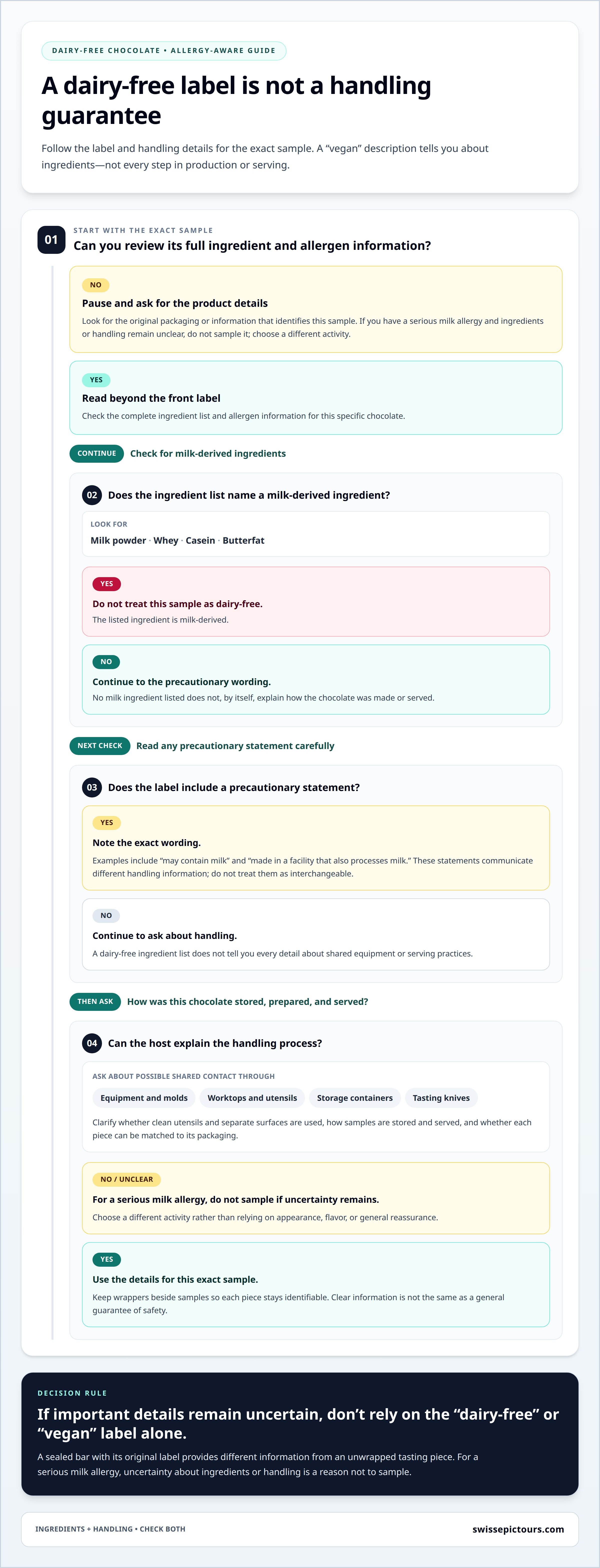
Chocolate may contain no dairy ingredients yet still encounter milk during production or serving. Shared equipment, molds, utensils, worktops, storage containers, and tasting knives can transfer traces between products. A “vegan” description addresses animal-derived ingredients, but not every handling step.
Before tasting, read the full ingredient and allergen information, not just the front label. Look for milk-derived ingredients such as milk powder, whey, casein, or butterfat. Also note precautionary wording, including “may contain milk” or “made in a facility that also processes milk.” These statements communicate different kinds of handling information, so don’t treat them as interchangeable.
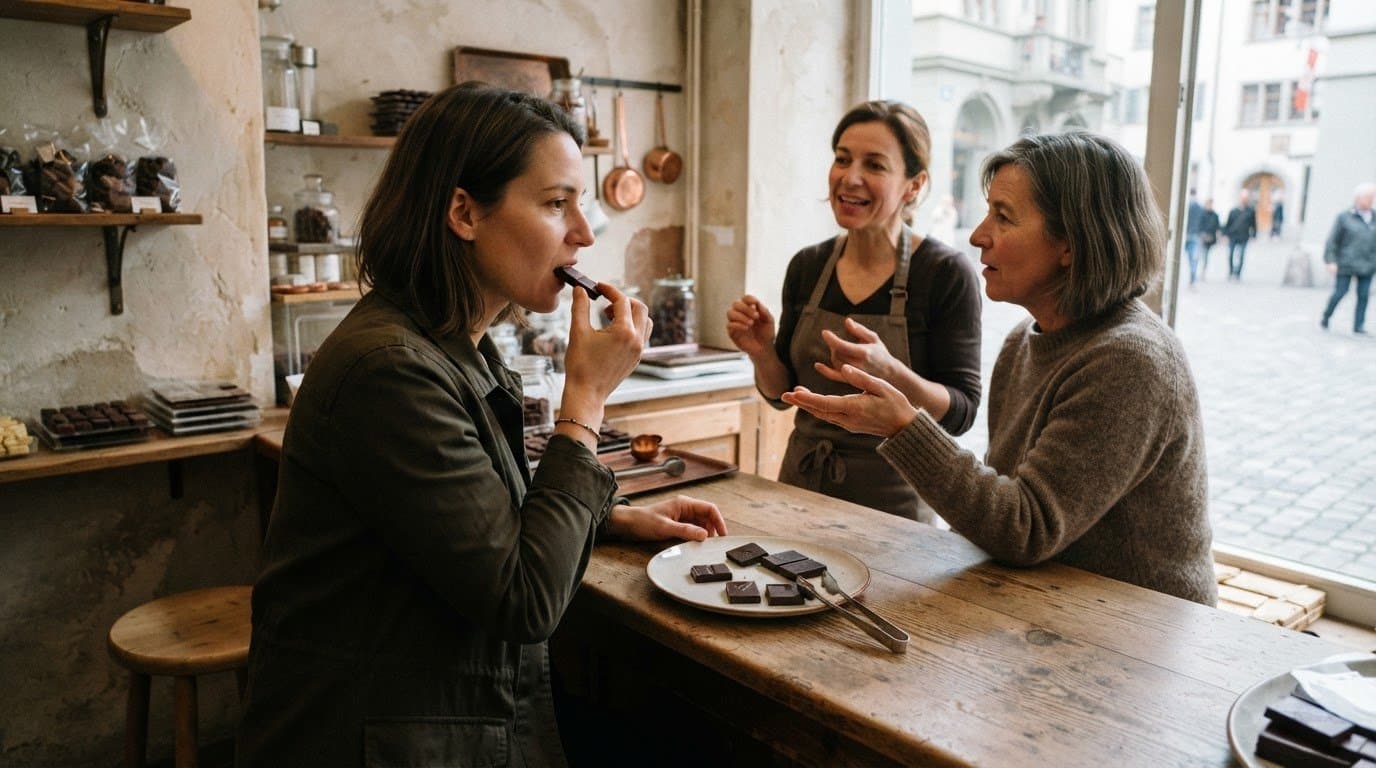
For a hosted tasting, explain the allergy clearly before samples are prepared. Ask how the chocolate is stored and served, whether clean utensils and separate surfaces are used, and whether the host can identify the packaging for each sample. A sealed bar with its original label provides different information from an unwrapped tasting piece. Keep wrappers beside samples to avoid confusion.
- Check ingredients: Read the entire label for milk terms and precautionary statements.
- Ask about handling: Clarify shared equipment, preparation surfaces, utensils, and storage.
- Keep samples identifiable: Match each piece to its wrapper or product information.
For a serious milk allergy, treat uncertainty about ingredients or handling as a reason not to sample the chocolate. A dairy-free claim alone can’t establish how a product was made, and tasting a small amount doesn’t remove cross-contact concerns. If the information doesn’t answer your questions, choose a different activity rather than relying on appearance, flavor, or general reassurance.
These details can shape the day’s itinerary as much as the tasting itself. A private guided tour offers a tailored way to explore Switzerland around your plans, with allergy considerations kept in view as you organize your experience.
Which Swiss chocolate brands offer dairy-free or vegan chocolate tastings?
Separate three things before choosing: the chocolate brand, the products it makes, and the tasting it hosts. A vegan bar doesn’t automatically mean a brand’s guided tasting includes vegan samples. Look for a tasting description that names dairy-free or vegan chocolate specifically, rather than relying on a general Swiss chocolate experience label.
Confiserie Sprüngli is one Swiss chocolatier to consider while planning. Its name alone doesn’t establish which products or tasting formats include dairy-free samples. For any brand, look for a current experience description that identifies the samples, then compare those details with the product packaging and allergen information.
Use this focused checklist when reviewing a brand’s tasting offer:
- Sample types: Does the description name dark chocolate, plant-based milk-style chocolate, or another dairy-free option?
- Product details: Can you match each sample to its ingredients and allergen statement?
- Experience format: Is it a hosted tasting, a self-guided selection, or a product range without a tasting session?
- Handling: Does the experience explain how samples are prepared and served?
These distinctions matter for allergy-aware visitors. A product range may include dairy-free bars without offering a tasting built around them. A tasting may serve dark chocolate but still use shared preparation tools. Treat “vegan” as a product description, not a complete account of allergens or handling.
For example, if a tasting description names dark chocolate but doesn’t identify its ingredients, an important practical question remains unanswered. Match the sample to its packaging and consider whether the handling information addresses your needs. If you can’t establish those details, don’t assume the maker’s name is enough. A thoughtful tasting choice depends on the specific samples and serving process, not simply the brand.
Where can I book a dairy-free Swiss chocolate tasting near me?
Start with a Swiss town or region already on your itinerary, then look for chocolate makers, confectioners, and tasting venues nearby. A venue’s address helps you judge whether it fits your route, but its location alone doesn’t establish that a dairy-free tasting is available. Consider the venue and the tasting details separately.
Before booking, look for a description that identifies the samples and format. A product shop, guided tasting, and chocolate-making demonstration are different activities. For example, a listing that mentions chocolate displays but no dairy-free samples doesn’t tell you whether the tasting suits your needs. Read the experience details rather than assuming every event offers the same selection.
Use these steps to narrow your options:
- Choose a base: Select your overnight town or planned stop along your route.
- Review the experience: Find details naming dairy-free or vegan samples, not just general chocolate tastings.
- Check allergy information: Look for ingredient details and information about preparation or shared equipment.
- Plan the visit: Match the venue’s location and session arrangements to your transport and daily schedule.
If you’re traveling between destinations, search around your planned stops instead of taking a long detour for a tasting. A venue near your accommodation or transport connection may fit more easily between sightseeing plans. Schedule the tasting alongside nearby activities, and leave longer journeys for another part of the day.
For a dairy allergy, book only when the sample details and handling information address your needs. A “vegan” label doesn’t, by itself, explain cross-contact controls. If a listing leaves important questions unanswered, contact the venue before committing. Confirm the tasting format, sample types, and allergy information in writing, then keep those details with your itinerary.
Swiss Epic Tours
Swiss Epic Tours helps you shape a broader Swiss itinerary around the places you want to explore, including chocolate stops identified during planning. Its private, driver-guided tours can connect a city visit with alpine scenery, without building the whole journey around one tasting.
A Zurich City Tour can suit plans centered on the city, while Swiss Alps private tours offer a way to include mountain landscapes in a wider visit. Share your preferred destinations and any dietary considerations that affect your plans. For a dairy-free tasting, confirm sample ingredients and handling directly with the venue, since a tour doesn’t establish a chocolate maker’s allergen practices.
For a more expansive route, the Multi-day Grand Tour of Switzerland can bring several regions into one carefully planned journey. Contact Swiss Epic Tours to discuss your Swiss travel plans.
Shape your Swiss journey around the experience
A dairy-free Swiss chocolate tasting experience can become a memorable pause within a wider Swiss itinerary. Choose a setting that suits your travels, whether you want time in a city, a passage through alpine landscapes, or a route connecting several regions. Swiss Epic Tours offers a Zurich City Tour, Swiss Alps private tours, and the Multi-day Grand Tour of Switzerland to help shape the journey around your interests.
For allergy-aware planning, keep the tasting venue’s ingredient and handling details central to your decision. Then build the surrounding day around the places you most want to see, leaving time to enjoy Switzerland’s remarkable scenery at an unhurried pace.
Contact Swiss Epic Tours to plan your tasting, and take the next step toward a Swiss journey thoughtfully shaped around your interests.
Frequently Asked Questions
What does a dairy-free Swiss chocolate tasting experience include?
A tasting usually involves sampling selected chocolates and comparing their aromas, sweetness, cocoa intensity, and finish. Depending on the format, a host may guide the tasting or provide products for independent comparison. For example, you might contrast bold dark chocolate with a sweeter plant-based style. The lineup and presentation vary by experience, so read its description to understand what the session involves.
Can dairy-free Swiss chocolate tastings accommodate other allergies?
Sometimes, but suitability depends on the specific products and how samples are prepared and served. A dairy-free chocolate may still contain or encounter ingredients such as nuts or soy. If you have multiple allergies, consider each one separately rather than treating “dairy-free” as a broad safety claim. Avoid any sample whose ingredients or handling information doesn’t address your needs, and choose another tasting format if necessary.