
A family heritage trip should revolve around your family’s Swiss connections, not a checklist of famous sights. To plan a family heritage trip to Switzerland, start with the village, home, church, or landscape linked to your relatives. Then choose a nearby base that allows time for unhurried visits. A focused route makes the journey personal without turning each day into a transfer.
It’s natural to want to visit the places your family talked about while making the trip enjoyable for everyone. This guide explains how to connect ancestral locations with regional accommodation, then balance meaningful visits with learning, rest, and scenic outings. A Lake Lucerne cruise or mountain railway can add a memorable day while keeping the itinerary connected to your family story. Aim for a journey that feels personal and distinctly Swiss, with clear priorities, a comfortable pace, and time to appreciate each place.
Key Takeaways
- Build the itinerary around documented family places and meaningful local connections, rather than trying to visit every famous sight.
- Choose a regional base that keeps ancestral visits and nearby excursions within a comfortable reach.
- Balance heritage stops with time to rest, explore, learn, and enjoy activities suited to different ages and interests.
- Add a lake cruise or mountain railway for a scenic way to experience Switzerland without making the trip only about transit.
1. Visiting a relative’s former home and favorite places
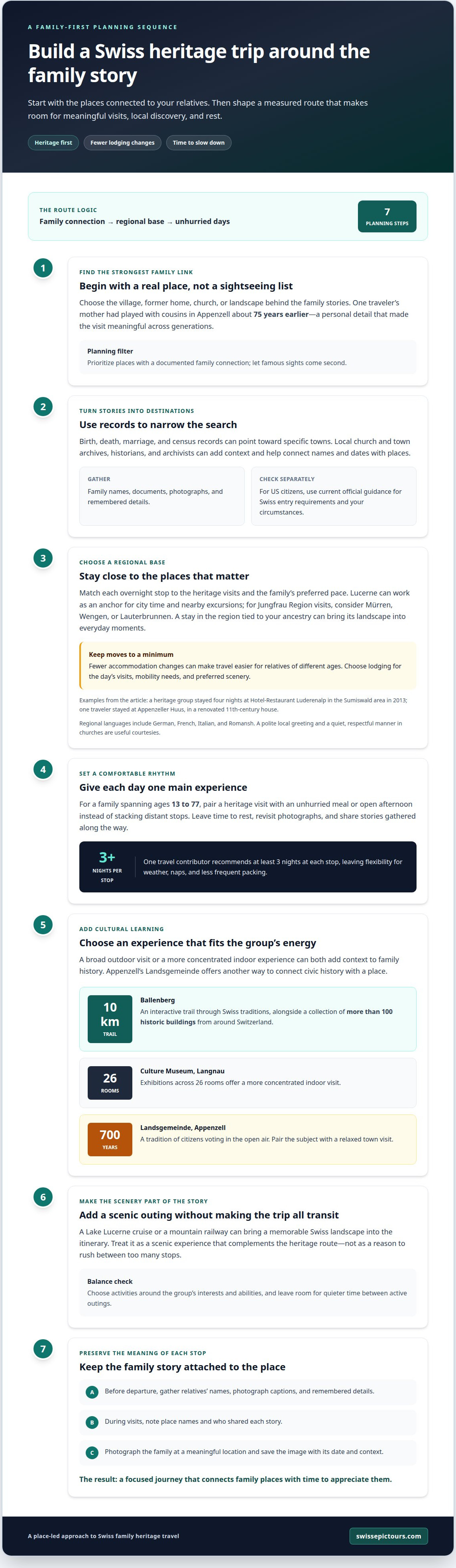
Begin with the strongest family link: a village, former home, church, or familiar landscape. A visit to Appenzell can connect generations; one traveler’s mother had played there with cousins about 75 years earlier. That detail gives the journey a human focus and helps distinguish meaningful stops from places included only for sightseeing. For families wondering how to plan a family heritage trip to Switzerland, start by identifying the places behind the stories.
For US citizens, travel-document requirements depend on current Swiss entry rules and the details of the journey. Plan this separately from genealogy, using current official guidance for your circumstances. The total trip budget varies with accommodation, meals, transport, travel dates, and the route between heritage locations. These choices shape the overall cost, so there is no single total that suits every family.
Family records can help narrow genealogical research to specific Swiss towns and shape visits around the places they identify. Birth, death, marriage, and census records may provide useful clues. Church and town records, historians, and archivists can add context, connecting names and dates with real destinations. Share known family names, documents, photographs, and stories with your tour planner. The question of how to plan a family heritage trip to Switzerland is easier to answer when these details guide the route.
For records, start with the local church and town archives connected to the family’s hometown, then draw on local historians and archivists. The right repository depends on the place and period being researched. Ballenberg, with more than 100 historic buildings from around Switzerland, offers a broader view of regional life. Choose travel dates around family schedules and the access or conditions that matter at each selected place.
Preserve the story as carefully as you plan the itinerary. Before departure, gather relatives’ names, photograph captions, and remembered details. During visits, note place names and who shared each story. Photograph the family group at a meaningful location, such as an ancestral village, and save the image with its date and context. These records help future generations understand why each stop mattered.
2. Accommodation suggestions by region
Choose accommodation by matching each base to the family’s heritage stops and preferred pace. Lucerne is a practical anchor for a short visit, with nearby excursions accessible from one place. For family connections elsewhere, a regional stay can bring the surrounding landscape into the experience. In the Sumiswald area, a heritage tour group stayed four nights at Hotel-Restaurant Luderenalp in 2013, making it an example of lodging placed near a specific regional focus.
For a stay in the Jungfrau Region, consider Mürren, Wengen, or Lauterbrunnen as a base. Each choice affects the feel of the trip and access to nearby visits, so weigh your family’s priorities, mobility, and preferred scenery. A village stay brings the mountains into everyday moments, while Lucerne may suit a trip focused on the city and nearby excursions. Keep accommodation changes to a minimum when relatives of different ages are travelling together.
Where ancestry points to Appenzell, lodging can deepen the connection to local architecture. One traveler stayed at Appenzeller Huus in a renovated 11th-century house. A historic building can lend a sense of place, while a more contemporary property may better suit families who prioritize familiar comforts. In either case, match the overnight location to the day’s visits, especially if a church, former home, or village is the main reason for staying in the region.
Language and customs vary across Switzerland’s regions, where German, French, Italian, and Romansh are spoken. A useful courtesy is to begin with a polite greeting in the local language, follow local cues, and keep a respectful, quiet manner inside a church. A planner can also shape overnight stops around the family’s priorities rather than moving lodging for every attraction. For a route connecting several regions, consider a tailored Swiss itinerary that keeps heritage visits central and travel days measured.
3. Balancing relaxation, exploration, education, and adventure
For a family spanning ages 13 to 77, plan each day around one main experience. Pair a heritage visit with an unhurried meal or open afternoon, rather than stacking several distant stops. A quieter day between active outings gives relatives time to rest, revisit photographs, and share stories gathered during the journey. This rhythm keeps the itinerary focused without making every hour feel scheduled.
Build in breathing room at each base. One travel contributor recommends at least 3 nights per stop, allowing flexibility for weather and naps. That approach also reduces the pressure to pack, travel, and settle into a new room repeatedly. Leave space around the family’s most meaningful visit, since conversations with relatives or time in a village can take longer than a planned museum stop.
For hands-on cultural learning, Ballenberg offers an interactive trail stretching 10 km, giving families a way to explore Swiss traditions through historic buildings and landscapes. In Langnau, the Culture Museum presents exhibitions across 26 rooms, offering a more concentrated indoor visit. Choose based on the group’s energy and interests: an expansive outdoor experience or several indoor galleries can each add context to family history.
Appenzell adds a distinctive cultural dimension through the Landsgemeinde, a 700-year tradition of citizens voting in the open air. Pair that subject with a relaxed town visit, allowing younger travelers to connect civic history with the place itself. For adventure, consider how an active outing fits the group’s abilities and the day’s pace; a demanding excursion may not suit every relative.
A simple planning approach can help: anchor each day with one heritage or cultural experience, add an optional activity, and leave time to rest. For example, pair a museum visit with a gentle local stroll instead of another cross-region transfer. Keep adventurous plans flexible, so family members can choose a quieter alternative while sharing the same destination and stories.
4. Lake cruises and mountain railways
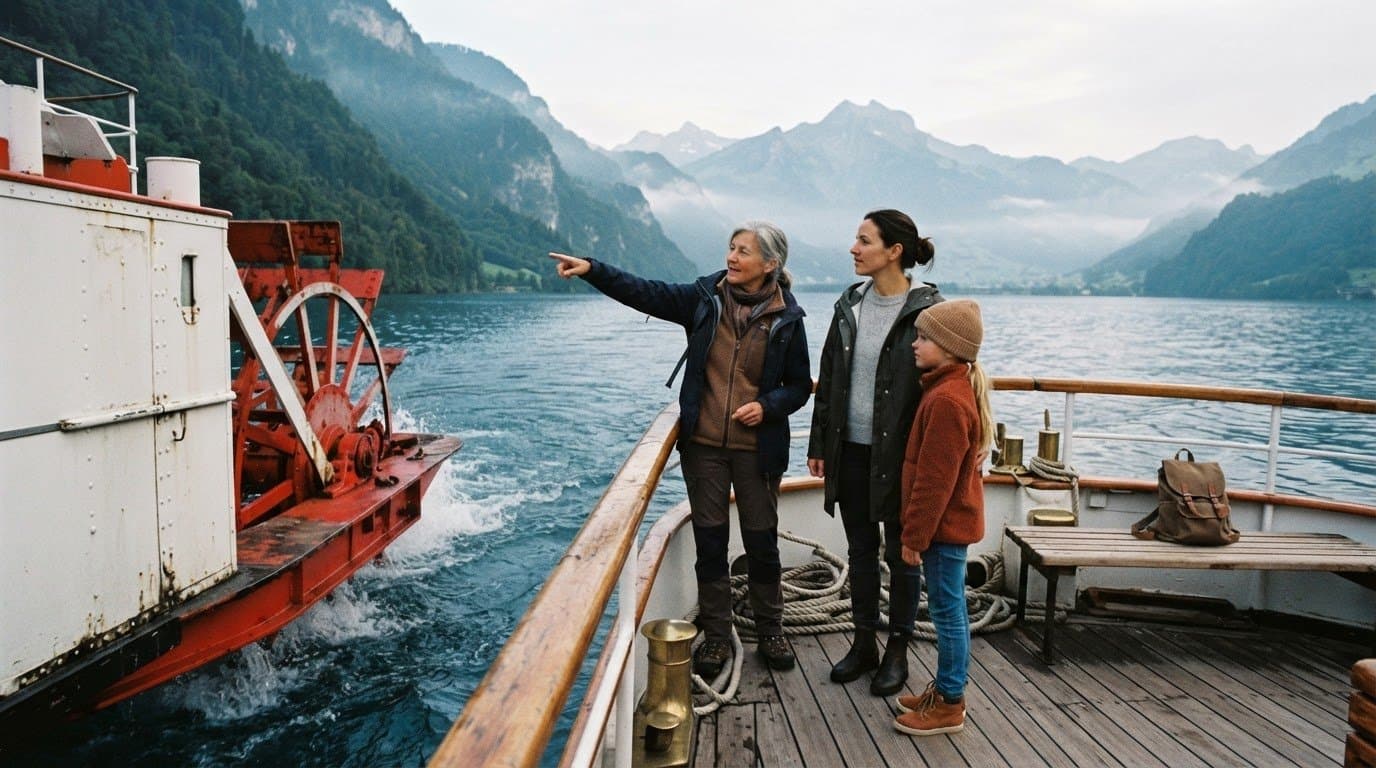
A Lake Lucerne cruise can make a travel day a scenic family experience. The lake’s Belle Époque steamship is described as one hundred years old, adding historic character to the journey. From Lucerne, families can pair a boat ride with time in the historic city center or a trip toward Rigi. This brings together heritage, water, and mountain scenery without making every outing about ancestral records.
For a railway excursion, the Rigibahn opened in 1871 and climbs to Rigi Kulm at 5,895 feet. The journey from the lake to the summit takes just under an hour. A planner can place this outing beside a quieter lake day, allowing the family to experience a celebrated route without filling the itinerary with consecutive excursions.
To assess whether the Swiss Travel Pass suits a family, a planner compares the planned public-transport journeys and eligible attractions with the pass’s cost. Children aged 16 and younger can travel free on public transportation around Switzerland with the Swiss Family Card; Swiss Travel Pass holders receive a 50% discount on visits to the Swiss Museum of Transport.
For travel between ancestral villages, map each town against the day’s visits, then plan suitable train, bus, or car connections. Factor in luggage, mobility, and how much time your family wants to spend in each place. Rail travel can suit a scenic connection, while a car journey may work well when several smaller locations are part of the same day.
Make the transport itself part of the heritage experience: pair a Lake Lucerne cruise with Rigi, or connect a family village visit to a memorable railway journey. For a personally coordinated mountain outing, plan a Swiss Alps private tour around the family’s route and interests.
For a group, a forum respondent suggests traveling from Lake Maggiore to Lugano or the Jungfrau Region. Another option is the train from Montreux to Zermatt, which takes 2.5 hours with one change at Visp. From Zermatt, the train journey to Zurich takes 3 hour 21 minute, giving families a clear basis for comparing onward rail legs with time spent around the lake and mountains.
Swiss Epic Tours
Swiss Epic Tours helps families shape their heritage priorities into a thoughtfully arranged journey through Switzerland. Share the ancestral towns, meaningful landmarks, and pace that suit your family, and your private, driver-guided itinerary can bring them together with regional landscapes and cultural stops.
For a journey across several regions, the Multi-day Grand Tour of Switzerland can provide a broad route; private day tours can focus on a particular area or excursion. Swiss Alps private tours offer another way to include mountain scenery alongside family visits. The best fit depends on how many places matter and how much time you want to spend in each.
Professional planning can help when coordinating transport and meaningful stops feels complex, or when you prefer a private, driver-guided experience to managing each connection yourself. Contact Swiss Epic Tours to discuss your family’s heritage journey and the places you hope to visit.
Let Your Family Story Shape the Journey
The most meaningful next step is to decide what you want the journey to leave with your family: a shared understanding of a hometown, a conversation sparked by an old photograph, or a new story connected to a familiar name. That intention can guide the route and help keep each day personal. A thoughtful way to plan a family heritage trip to Switzerland is to make those family priorities the starting point, then build the experience around them.
Swiss Epic Tours offers the Multi-day Grand Tour of Switzerland, Zurich City Tour, and Swiss Alps private tours. These private experiences can connect travel with the places and landscapes your family wants to explore, while keeping the itinerary centered on what matters to you.
Contact Swiss Epic Tours to discuss your family’s journey and the Swiss places you hope to include. Your story can be the beginning of a remarkable shared adventure.
Frequently Asked Questions
How can a professional plan an itinerary around a family’s ancestral towns in Switzerland?
A tour planner can use family names, photographs, and known hometowns to build a route with clear priorities. The itinerary can focus on the most meaningful ancestral locations, group nearby visits where practical, and follow your family’s preferred pace. Share which relatives or stories matter most, along with any mobility needs. These details help distinguish essential stops from optional discoveries and make the journey more personal.
When is the best time to visit Switzerland for a family heritage trip?
Choose dates that suit your family’s schedules and take into account access or conditions at the places you plan to visit.