

Artisans of Leisure Switzerland reviews can help you understand what travelers say about tailored itineraries, personal planning, and service. Look for recurring details about how a trip reflected individual interests, rather than assuming every journey follows the same pattern. The value lies in specific examples.
For a Switzerland trip, personalization matters: a day among alpine peaks calls for different pacing and logistics than exploring historic towns or lakeside scenery. You want to know what planning involves and whether the service suits the journey you have in mind. This article explains what reviews can reveal, how to interpret them, and how bespoke travel planning fits into the wider picture.
Key Takeaways
- Look for review details about how an itinerary reflects travelers’ interests, preferred pace, and chosen destinations.
- Assess personalized planning by noticing how clearly reviews describe communication, coordination, and support.
- Use recurring themes across reviews to build a more balanced picture than relying on a single traveler’s experience.
- Explore Swiss Epic Tours’ private day tours, Swiss Alps tours, and multi-day Grand Tour when planning a tailored journey through Switzerland.
Tailored itineraries
A tailored Switzerland itinerary connects a traveler’s interests with the places, pace, and experiences that matter most to them. Reviews of Artisans of Leisure’s Switzerland trips can show how travelers describe that process. Look for specific examples, such as why a reviewer chose Lucerne, the Jungfrau region, or Zermatt, rather than relying on broad praise.
Start by separating destination choices from itinerary design. A list of famous stops tells you where someone went, but not why the route suited them. A useful review may explain how a traveler’s interest in mountain scenery shaped time in Zermatt, or how a preference for historic streets influenced a stay in Bern. Those details reveal more than adjectives such as “wonderful” or “perfect.”
Look for evidence that the itinerary balanced different experiences. Switzerland offers lakeside scenery, alpine viewpoints, city architecture, village visits, relaxed meals, and active outings. A traveler might describe combining Lucerne’s old town with a mountain excursion before continuing toward the Bernese Oberland. A review is more informative when it explains the order and rhythm of these experiences.
Route logic matters because each stop affects the next. A thoughtful plan considers how travelers move between regions, where they want to linger, and whether frequent hotel changes suit their style. If a review describes a journey linking Zurich, Lucerne, and Interlaken, note whether the writer found the transitions comfortable or rushed. One traveler’s ideal pace may not suit another, so look for the reasons behind the verdict.
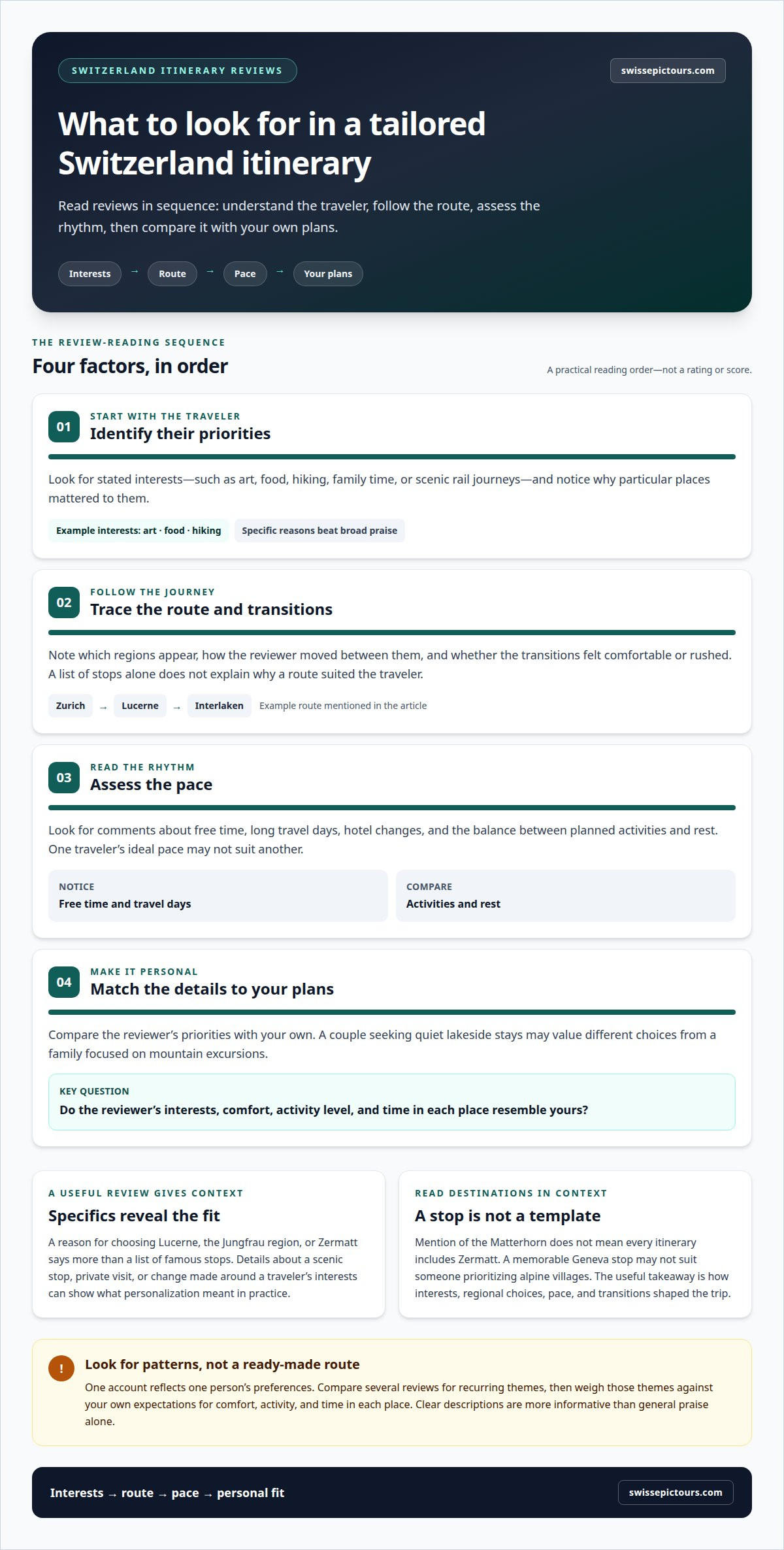
Use this simple reading sequence to assess itinerary feedback:
- Identify the traveler’s priorities. Look for stated interests, such as art, food, hiking, family time, or scenic rail journeys.
- Trace the route. Note which regions appear and how the reviewer describes moving between them.
- Assess the pace. Look for comments about free time, long travel days, or the balance between planned activities and rest.
- Match the details to your plans. A couple seeking quiet lakeside stays may value different choices than a family focused on mountain excursions.
Specific details help distinguish a useful account from a brief reaction. A review describing a private visit, a scenic stop, or a change made to reflect a traveler’s interests offers more insight than a rating without context. Still, one account reflects one person’s preferences. Compare several reviews for recurring themes, then consider whether they match your expectations for comfort, activity, and time in each place.
Itinerary flexibility is another detail worth noticing. A traveler may value a slower morning in Montreux, extra time near Lake Geneva, or a day shaped around a cultural interest. Reviews can show whether personalization felt meaningful when writers explain what mattered to them and how the trip reflected it. General praise alone cannot show which decisions were personal, so give more weight to clear descriptions of priorities and outcomes.
Read destination mentions in context. Seeing the Matterhorn in a review doesn’t mean every itinerary includes Zermatt, and a memorable stop in Geneva may not suit someone prioritizing alpine villages. The strongest takeaway is not a ready-made route to copy, but a clearer sense of how personal interests, regional choices, pace, and practical transitions shape a Switzerland journey.
Personalized planning and service
Artisans of Leisure Switzerland reviews can reveal how travelers experienced the planning process, not just where they went. Look for comments about preferences shaping decisions, such as choosing a quieter hotel near Lake Geneva or spending more time at a Zurich museum. These details help distinguish personal attention from polished descriptions that could fit any itinerary.
Communication is one useful theme to assess. A detailed review may describe whether conversations clarified priorities, answered practical questions, or helped resolve competing preferences. One traveler might want scenic rail journeys while another prefers private road transfers. A review explaining how those preferences were handled offers more insight than general praise for excellent service.
Pay attention to the planning sequence described. A personalized trip can involve gathering travelers’ interests, shaping a proposed route, and refining choices before departure. A review might explain how a planned Lucerne stay changed after the traveler expressed greater interest in alpine scenery. Specific examples show what customization meant in practice; vague praise makes the process harder to picture.
Service also includes practical transitions between memorable moments. Travelers may comment on arrival arrangements, local transportation, hotel changes, or coordination around a day in the Jungfrau region. These details matter because a beautiful stop can feel less rewarding when logistics are confusing. Look for descriptions of how transitions worked rather than assuming every trip follows the same format.
To interpret service feedback, sort observations into a few clear themes:
- Listening: Does the reviewer explain which interests or preferences influenced the plan?
- Clarity: Are itinerary decisions and practical details described in understandable terms?
- Coordination: Does the account mention how travel between places, such as Zurich and Lucerne, was handled?
- Adaptation: Does the review give an example of a change that made the trip feel more personal?
Then consider who wrote each review and what mattered to them. A family traveling with children may value manageable days and convenient transfers. A couple focused on food and culture may prioritize time in Lausanne or Bern. A traveler with mobility considerations may judge a mountain outing differently from an experienced hiker. These contrasts don’t invalidate reviews; they explain why travelers may describe service differently.
Look for concrete descriptions of both strong moments and friction. A review might praise clear coordination but mention that an activity felt tightly scheduled. That combination can be more useful than unqualified praise because it shows what the traveler noticed and how it affected the experience. Compare accounts for recurring patterns before treating one comment as representative.
It also helps to separate the planner’s role from personal preferences. Someone who enjoys a full schedule may appreciate several stops in a day, while another traveler may prefer a long lunch overlooking Lake Thun. Artisans of Leisure Switzerland reviews can illustrate how travelers describe these choices, but your preferred pace is personal. Focus on decision-making details that match your expectations.
For a practical assessment, note each review’s date, trip type, and specific service examples. Compare those details across accounts, especially repeated comments about communication and coordination. If you’re turning those priorities into a Switzerland itinerary, explore private Switzerland tours as one way to consider an individual travel experience.
Swiss Epic Tours
Swiss Epic Tours helps travelers turn their interests in Switzerland into private, driver-guided experiences. If reviews have clarified the destinations and pace you value, its Multi-day Grand Tour of Switzerland, Swiss Alps private tours, and private day tours offer ways to shape a journey around those priorities. A Zurich City Tour is another option for travelers starting with time in the city.
Choose the format that best fits your plans: a broader multi-day journey, an alpine-focused experience, or a private day exploring selected places. Swiss Epic Tours’ professional, multilingual guides create personalized experiences across Switzerland’s landscapes, historic towns, and hidden gems. To discuss a trip shaped around your interests, contact Swiss Epic Tours.
Turn your Switzerland ideas into a personal journey
Artisans of Leisure Switzerland reviews can offer perspective, but your own priorities should shape the journey. Consider what you most want to remember: a first view of the Alps, an unhurried city visit, or the freedom to explore several regions at your own pace. Those preferences give a trip its direction.
Swiss Epic Tours offers a Multi-day Grand Tour of Switzerland, a Zurich City Tour, and Swiss Alps private tours. These options provide different ways to experience the country, from urban discoveries to sweeping mountain landscapes. Share the places and experiences that matter to you with Swiss Epic Tours, and start shaping your journey.
Ready to explore what could suit your plans? Contact Swiss Epic Tours to discuss your Switzerland journey. The next chapter can begin with a simple idea and grow into a memorable experience among Switzerland’s remarkable landscapes.